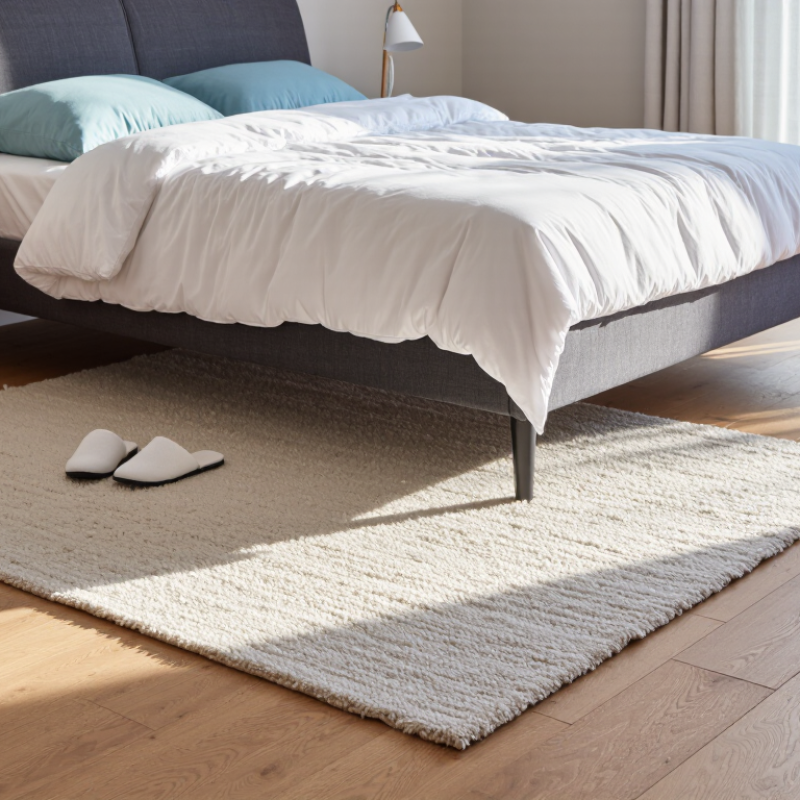
| Low-Pile Tufted Carpet | Cut pile or loop pile, usually latex-backed or textile-backed | Polyamide, polypropylene, polyester, or wool blends | 21–23, depending on construction | Beside the bed, foot of the bed, and larger bedroom zones | Balanced comfort and durability; low pile reduces snagging and makes furniture placement easier | Regular vacuuming; spot cleaning according to fibre and backing instructions | A versatile choice for global residential projects; request abrasion, castor-chair, fire, and slip information where relevant |
| Needle-Punched Carpet | Mechanically entangled nonwoven fibres, commonly supplied with a stabilising backing | Polypropylene or recycled polyester | Usually 21–22 | Temporary bedrooms, rental housing, guest rooms, and light-use bedside areas | Lightweight, economical, and dimensionally stable; generally less plush than tufted or woven carpets | Easy routine vacuuming; replace when surface wear becomes visible | Check edge stability, backing odour, dimensional stability, and declared recycled content |
| Flat-Woven Carpet | Woven surface with little or no pile; may be reversible depending on design | Wool, polypropylene, polyester, cotton, or blended yarns | 21–23, subject to tested construction | Under or alongside beds where doors and furniture require low clearance | Low profile, easy door clearance, and good visual definition; less cushioning underfoot | Vacuum with care; avoid aggressive brushing on loose or delicate yarn structures | Confirm dimensional stability, colourfastness, and whether a separate anti-slip underlay is required |
| Wool Loop-Pile Carpet | Woven or tufted loop pile with a dense, textured surface | Wool or wool-rich blends | 22–23 when tested for the intended use | Premium bedrooms and family bedrooms with regular daily traffic | Naturally resilient, warm, and comfortable; loop construction can show pulls from sharp objects or pet claws | Frequent low-suction vacuuming; treat spills promptly and use wool-compatible products | Ask for responsible-fibre documentation, colourfastness data, moth-resistance treatment details, and care instructions |
| Cut-Pile Plush Carpet | Dense cut pile with a soft, upright surface | Polyamide, polyester, wool, or blended yarns | 21–22; 23 requires suitable density and test evidence | Personal bedrooms and comfort-focused bedside areas | High softness and thermal comfort; shading, tracking, and compression may be more visible | Vacuum in multiple directions; rotate loose rugs to distribute wear where practical | Evaluate pile recovery, furniture indentation, shedding, and compatibility with robotic vacuums |
| Shag or High-Pile Carpet | Long cut pile or looped yarns with a deep surface profile | Polyester, polypropylene, wool, or mixed fibres | Typically 21–22; verify carefully before specifying 23 | Low-traffic decorative bedside zones with sufficient clearance | Very soft and visually striking; more difficult to clean and more prone to flattening | Use a vacuum suitable for long pile; inspect regularly for trapped dust and yarn distortion | Confirm pile height, fire performance, edge finish, trip risk, and cleaning method for the destination market |
| Printed or Patterned Carpet | Tufted or woven base with a printed, solution-dyed, or pattern-forming surface | Polyamide, polyester, polypropylene, wool, or blends | 21–23, based on the complete tested product | Design-led bedrooms, hospitality-style interiors, and children’s rooms | Patterns can disguise minor marks and traffic lanes; colour durability depends on fibre and dye system | Follow the declared cleaning method; test stain-removal products on an inconspicuous area | Request lightfastness, wet and dry rubbing, stain-resistance, and colour-matching information |
| Modular Carpet Tiles | Small carpet modules, commonly tufted, with bitumen, PVC, polyurethane, or textile backing | Polyamide, polypropylene, polyester, or recycled-content blends | 22–23 when the complete system is appropriately tested | Large bedrooms, serviced apartments, student housing, and replaceable floor zones | Localised replacement, design flexibility, and efficient installation; seams may be visible if poorly fitted | Replace individual damaged modules; vacuum regularly and follow adhesive or installation guidance | Confirm tile dimensions, backing compatibility, installation method, seam appearance, and end-of-life recovery options |
| Recycled-Fibre Carpet | Tufted, woven, or needle-punched construction using recycled or partially recycled inputs | Recycled polyester, recycled polypropylene, recycled polyamide, or reclaimed wool | 21–23; classification depends on performance, not recycled content alone | Eco-conscious bedrooms, residential developments, and procurement projects with material targets | Performance can match conventional products when fibre quality, density, backing, and construction are suitable | Use the same care routine specified for the construction and fibre type | Verify recycled-content claims, chain-of-custody evidence, emissions data, durability tests, and recyclability claims |