Sorry, your browser is not supported. For a better experience, keep your browser up to date. Check here for latest versions
China has become a major sourcing hub for Stainless Steel Water Bottle production. Its suppliers serve retailers, outdoor brands, hotels, and corporate buyers worldwide. This guide introduces ten manufacturers worth examining before making a purchasing decision. Each company should be judged beyond catalog photos and attractive prices.
Material quality matters. Reliable suppliers clearly identify stainless steel grades, such as 304 or 316, when appropriate. They should provide factory samples, inspection records, and test information for lids, seals, coatings, and insulation performance. A well-made bottle should feel balanced, close smoothly, and resist leaks after repeated daily use. Small details matter.
The selection also considers production capacity, customization experience, export communication, and quality-control procedures. Supplier audits, sample approvals, and third-party testing can reduce avoidable risks. Certifications may support confidence, but buyers should verify their scope, issuing body, and validity. A certificate alone proves little.
Practical experience suggests that communication speed often predicts project stability. However, this is not a perfect rule. Smaller factories may offer careful service, while larger suppliers may provide stronger equipment and broader capacity. Buyers should compare minimum order quantities, tooling charges, packaging options, delivery records, and after-sales support.
No ranking removes every uncertainty. Supplier data changes. Product claims can also be misunderstood without independent verification. Therefore, this overview is a starting point, not a substitute for factory visits, approved samples, or contractual quality requirements. Used carefully, it can help importers identify credible Chinese partners and build a more dependable Stainless Steel Water Bottle supply chain.
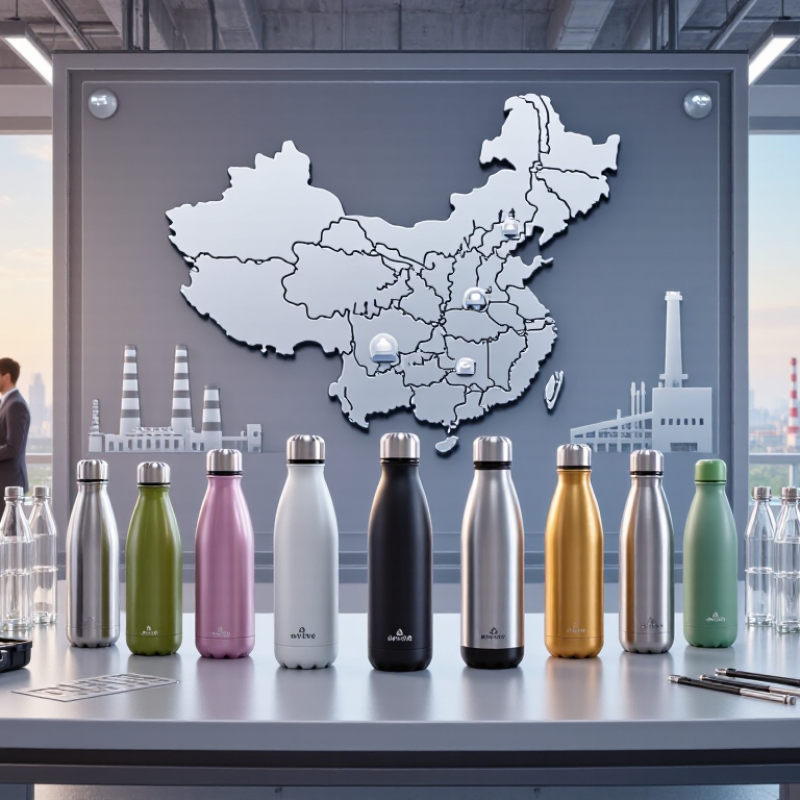
Stainless steel water bottle suppliers in China are more than product sellers. They connect material sourcing, bottle forming, testing, packaging, and international delivery. A capable supplier may operate as a factory, an export partner, or both. Their role is to turn a design brief into a safe, repeatable product.
In practical work, suppliers select stainless steel grades, inspect sheet thickness, and control welding quality. They also manage vacuum insulation, lid fitting, surface finishing, and leak testing. A reliable team can provide food-contact test reports, material records, production samples, and batch traceability. These documents help buyers verify claims instead of trusting attractive photographs. Factory audits can reveal useful details, such as clean welding areas, calibrated testing tools, and clearly labeled cartons.
Customization is another important function. Suppliers may adjust capacity, mouth size, coating, color, engraving, and packaging. They should explain minimum order quantities, sampling charges, lead times, and shipping terms clearly. Small details matter. A lid that feels tight during sampling may loosen after repeated use. This is where practical experience becomes valuable.
No supplier is perfect. A low price can hide thinner steel, weaker insulation, or inconsistent polishing. Even experienced buyers can overlook packaging damage during long-distance transport. I would request production samples and written quality criteria before placing a large order. Communication also deserves attention. Delayed replies, vague test evidence, or changing specifications can create problems later. Suppliers in China support the full purchasing process, but buyers still need careful verification and realistic expectations.
China’s stainless steel bottle industry is concentrated in several practical manufacturing regions. Zhejiang, especially Yongkang and Wuyi, is known for vacuum insulation, forming, polishing, and assembly. Guangdong often supports export-oriented production, packaging, and rapid product development. Jiangsu contributes strong metal-processing capacity and automated production equipment. These regional strengths can influence lead times, tooling costs, and minimum order quantities.
A capable supplier should control more than appearance. Look for stainless steel grade verification, weld inspection, vacuum retention testing, and food-contact documentation. Experienced factories usually provide production samples before mass manufacturing. They should also explain wall thickness, lid materials, coating durability, and temperature-performance testing. Batch records matter. They help buyers investigate defects instead of guessing after delivery.
Supplier quality can vary within the same region. No factory is perfect. A polished showroom may hide weak inspection systems or unstable subcontracting. Buyers should check audit reports, equipment condition, sample consistency, and corrective-action records. Ask how rejected bottles are separated and documented. This detail often reveals operational discipline. Some manufacturers promise very short delivery times, but rushed production can increase dents, coating flaws, or leakage. A slower, transparent schedule may be safer. Even experienced buyers should reassess assumptions, because capabilities change with equipment, labor, and export demand.
China’s top stainless steel water bottle suppliers should be assessed through standards, materials, and repeatable quality checks. For food-contact safety, request current test reports against applicable regulations, such as China’s GB standards, FDA requirements, or EU food-contact rules. Requirements differ by destination market. A reliable supplier should provide batch traceability, factory records, and clear testing dates.
Material claims need careful verification. Food-grade 304 stainless steel suits most daily bottles, while 316 can offer better resistance in salty environments. Ask for material certificates, not only a printed “304” label. Inspect the inner wall, weld seams, thread alignment, and silicone gasket. A clean weld should feel smooth, with no sharp edge or dark residue. Test samples with warm water, repeated opening, and a one-meter leak check. Vacuum bottles also need thermal retention data under defined conditions.
Tips: Compare three production samples, not one. Check whether the lid still seals after repeated use. Ask how rejected units are recorded. A perfect sample proves little. I have seen attractive bottles fail at the cap after several days. That weakness is easy to miss during a quick inspection. Suppliers should explain corrective actions, inspection frequency, and tolerance limits. Photos help, but independent laboratory verification is stronger. Be cautious when documents look complete yet lack lot numbers, laboratory identity, or test methods.
When comparing China’s top stainless steel bottle suppliers, start with evidence, not polished catalogs. Ask for material documentation, production photos, and recent inspection records. A dependable supplier should clearly identify steel grades, liner construction, lid materials, and insulation performance. Request samples from different production batches, not only one carefully selected unit. Samples can mislead.
Test each bottle with hot and cold water. Check temperature retention after six and twelve hours, then inspect the exterior for sweating, dents, or uneven coating. Examine the threads, silicone seal, welding points, and drinking opening by hand. Details matter.
A strong supplier should explain its leak testing process and provide measurable quality records, rather than vague promises.
Price comparisons should include mold fees, packaging, shipping terms, minimum order quantities, and replacement policies. Ask how the factory handles color changes or late material arrivals. I have learned that fast replies do not always mean reliable production. One supplier may communicate well but lack consistent inspection controls. Another may have excellent equipment but weak export coordination. Do not guess. Review factory capacity, worker training, audit results, and market-specific food-contact documentation. If possible, arrange a video inspection or independent pre-shipment check. My own comparison sheets have missed small details before, especially carton strength and spare seal availability. That is why every claim deserves a document, a sample, or a direct production-floor observation.
China’s top 10 stainless steel water bottle suppliers should be compared beyond price. Start by checking factory capability, material certificates, and production history. Request samples from several suppliers. Inspect the lid seal, welds, coating, and inner-wall finish. A bottle may look excellent but still leak after repeated use. Ask for test reports covering food-contact safety, vacuum performance, and durability. Clear records show stronger quality control.
Customization usually includes capacity, bottle shape, colors, logos, packaging, and accessories. Provide a measured drawing instead of a simple reference photo. Confirm logo size, printing method, color references, and artwork format. Stainless steel grades also matter. Food-grade 304 steel suits many daily bottles, while 316 steel may support harsher environments. Extra features increase cost. They can also increase failure points.
Export planning needs careful document control. Confirm carton dimensions, gross weight, labeling, barcode placement, and destination requirements before production. Discuss shipping terms, inspection timing, payment milestones, and replacement procedures in writing. Ask whether the supplier can provide commercial invoices, packing lists, and origin documents. A pre-shipment inspection can catch scratched coatings or loose lids. It is not perfect, though. Some defects appear only after weeks of use, so a small trial order remains wise. Delivery schedules may also change during peak production periods. Allow practical buffer time.
Anonymous supplier benchmark profiles based on common stainless steel drinkware manufacturing capabilities, sourcing requirements, and export practices in China. MOQ, lead time, and certification details should be confirmed directly during supplier qualification.
| Rank | Supplier Profile | Typical Manufacturing Cluster | Core Manufacturing Capability | Common Materials | Customization Options | Typical MOQ | Typical Lead Time | Quality and Compliance Checks | Export Considerations | Best-Suited Buyer |
|---|---|---|---|---|---|---|---|---|---|---|
| 1 | Vacuum Insulated Bottle Specialist | Zhejiang and Jiangsu | Deep drawing, double-wall vacuum insulation, laser welding, leak testing, and automated polishing. | SUS 304 SUS 316 Food-grade PP Silicone | Powder coating, electrostatic painting, laser engraving, silk screening, custom lids, color matching, and retail packaging. | 500–1,000 units | 25–45 days | Wall-thickness inspection, vacuum retention testing, temperature-retention testing, coating adhesion, and food-contact material review. | Confirm carton drop-test requirements, product dimensions, HS classification, packing marks, and destination-market food-contact rules. | Private-label brands and specialty beverage retailers. |
| 2 | High-Volume Sports Bottle Manufacturer | Guangdong and Fujian | High-speed forming, automated assembly, straw-lid production, silicone molding, and large-batch inspection. | SUS 304 Tritan-compatible parts PP Silicone | Sports caps, carry handles, straws, measurement markings, custom colors, logo printing, and barcode labels. | 1,000–3,000 units | 30–50 days | Torque testing, cap-cycle testing, straw-flow testing, leakage checks, odor inspection, and random AQL sampling. | Verify packaging compression strength, plastic component declarations, pallet configuration, and ocean-freight carton limits. | Fitness, outdoor, school, and promotional-product programs. |
| 3 | Corporate Gift and Promotional Supplier | Zhejiang | Standard bottle assembly, logo decoration, gift-set packing, insert-card production, and short customization cycles. | SUS 201 SUS 304 PP Silicone | One-color printing, laser marking, gift boxes, sleeves, thank-you cards, and mixed-color production. | 100–500 units | 15–30 days | Artwork approval, logo-position inspection, lid fit testing, surface inspection, and pre-shipment quantity verification. | Request final artwork approval, confirm individual-unit protection, and check whether gift packaging changes volumetric freight cost. | Corporate events, conferences, hotels, and promotional campaigns. |
| 4 | Premium 316 Stainless Steel Supplier | Jiangsu and Zhejiang | Precision forming, high-quality internal polishing, vacuum insulation, premium finishing, and controlled assembly. | SUS 316 SUS 304 Food-grade silicone | Brushed or mirror finishes, textured coatings, fine laser engraving, premium lids, and custom presentation boxes. | 500–1,000 units | 35–55 days | Material-grade documentation, weld inspection, vacuum testing, corrosion-resistance review, and finish consistency checks. | Obtain material declarations, validate claims concerning corrosion resistance, and review destination-country labeling requirements. | Premium lifestyle, hospitality, and executive-gift products. |
| 5 | Kids and School Bottle Manufacturer | Guangdong and Zhejiang | Compact bottle forming, child-friendly lid assembly, straw systems, handle molding, and small-part inspection. | SUS 304 Food-grade PP Silicone | Character-free custom graphics, easy-grip sleeves, flip lids, name labels, color sets, and age-specific accessories. | 500–2,000 units | 30–50 days | Small-component inspection, sharp-edge checks, leak testing, pull-force testing, food-contact review, and age-grade assessment. | Check applicable child-product regulations, packaging warnings, multilingual instructions, and restricted-substance requirements. | Schools, childcare channels, family retailers, and children's outdoor products. |
| 6 | Wide-Mouth Outdoor Bottle Supplier | Zhejiang and Anhui | Wide-mouth forming, rugged lid assembly, high-durability coating, carabiner accessories, and outdoor-use testing. | SUS 304 SUS 316 PP Silicone | Handle caps, threaded lids, protective boots, textured powder coating, measurement scales, and outdoor color palettes. | 500–1,500 units | 30–50 days | Thread compatibility, impact simulation, coating abrasion, leak testing, cap-cycle testing, and temperature-performance checks. | Confirm accessory packing, corrosion protection for metal components, carton durability, and seasonal shipping schedules. | Camping, hiking, cycling, travel, and outdoor-equipment sellers. |
| 7 | Tumbler and Travel Mug Manufacturer | Jiangsu and Guangdong | Tumbler drawing, vacuum insulation, sliding-lid assembly, cup-holder sizing, and coating-line production. | SUS 304 Food-grade PP Silicone | Handle designs, sliding lids, straw lids, car-cup compatibility, color matching, engraving, and retail cartons. | 500–1,000 units | 25–45 days | Lid-seal testing, cup-holder dimension checks, vacuum retention, coating adhesion, and hot-liquid safety review. | Confirm upright and inverted leak requirements, packaging orientation, pallet height, and instructions for hot beverages. | Coffee retailers, commuting products, office merchandise, and travel accessories. |
| 8 | Eco-Focused Reusable Bottle Supplier | Zhejiang and Fujian | Single-wall and insulated bottle production, recyclable packaging coordination, silicone-part assembly, and decoration. | SUS 304 Recycled stainless steel options PP Silicone | Minimalist printing, recycled-paper packaging, removable sleeves, custom caps, and sustainability documentation support. | 500–2,000 units | 25–45 days | Material traceability, food-contact testing, coating inspection, recycled-content documentation where applicable, and leak testing. | Substantiate recycled-content claims, verify packaging-material requirements, and avoid unsupported environmental statements. | Sustainable retailers, NGOs, events, and environmentally focused product lines. |
| 9 | Small-Batch OEM and ODM Workshop | Guangdong and Zhejiang | Prototype development, small-run forming, manual assembly, custom lid sourcing, and flexible product iteration. | SUS 304 SUS 201 PP Silicone | New shapes, prototype samples, custom colors, logo decoration, lid modifications, packaging concepts, and mixed SKUs. | 100–500 units | 20–40 days | Golden-sample approval, dimensional inspection, fit testing, leak testing, artwork confirmation, and pre-production review. | Clarify tooling ownership, sample charges, intellectual-property protection, Incoterms, and responsibility for customs documents. | Startups, test launches, crowdfunding campaigns, and new product development. |
| 10 | Large-Format and Commercial Bottle Supplier | Jiangsu and Anhui | Large-capacity bottle forming, heavy-duty handles, insulated containers, custom cartons, and commercial-volume production. | SUS 304 SUS 316 PP Silicone | Large handles, carry straps, wide-mouth openings, volume markings, custom lids, coating options, and palletized packing. | 500–1,500 units | 35–60 days | Capacity verification, handle-load testing, dimensional checks, vacuum retention, leak testing, and carton compression testing. | Calculate dimensional weight, confirm pallet and container loading plans, review lifting instructions, and verify destination labeling. | Worksites, sports teams, commercial programs, hospitality, and bulk procurement. |