Sorry, your browser is not supported. For a better experience, keep your browser up to date. Check here for latest versions
Choosing whiskey filtration equipment requires more than comparing micron ratings or stainless-steel finishes. The right system must protect flavor, maintain clarity, and support consistent production under approved operating conditions. Whiskey filtration can involve plate filters, cartridge systems, membrane units, or specialized polishing equipment. Each option creates different effects on flow rate, aroma retention, maintenance, and product loss.
A practical decision begins with the whiskey’s characteristics. A richly textured spirit may lose desirable oils through overly fine filtration. A lighter style may need stronger polishing to remove haze and improve appearance. Think about the liquid temperature, viscosity, suspended particles, batch volume, and target throughput. Small details matter. A cloudy sample after cooling can reveal problems that a room-temperature inspection misses.
Equipment quality also depends on documentation and service support. Check food-contact materials, pressure ratings, cleaning procedures, replacement-part availability, and supplier testing records. Ask for evidence from comparable applications, not only attractive specifications. Pilot trials are valuable because laboratory results rarely predict every production condition. This is where judgment matters, and mistakes can happen. A filter that performs well on paper may reduce yield or soften the whiskey’s character. Operators should record flow pressure, clarity, sensory changes, and cleaning results during each trial. Reliable selection combines engineering data with experienced tasting and careful process control. It also respects local regulations, sanitation requirements, and responsible manufacturing practices.
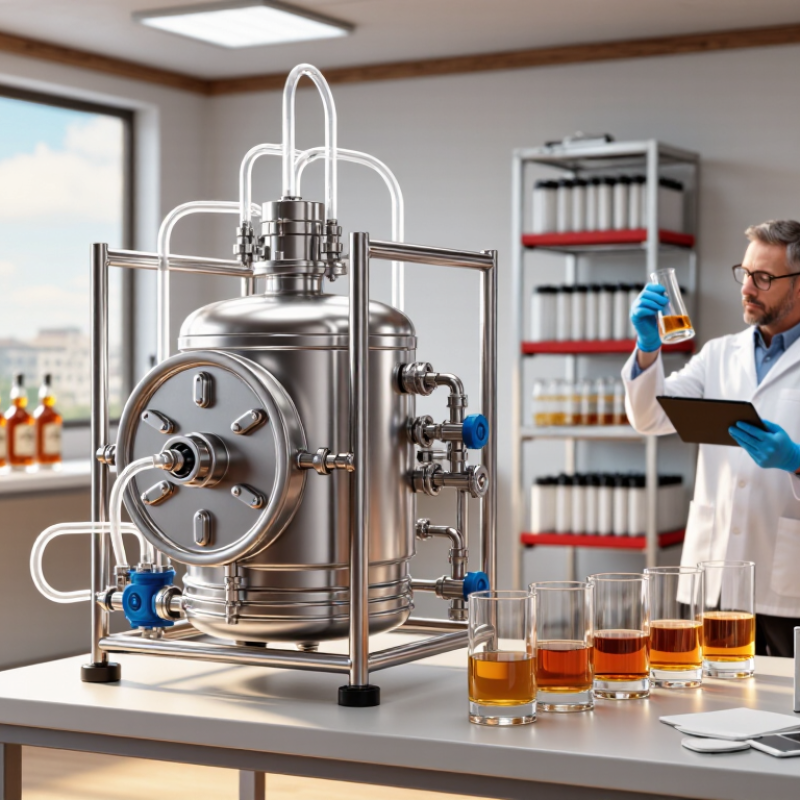
Whiskey filtration equipment protects clarity, flavor, and production consistency. Its core purpose is controlled separation, not aggressive purification. During cooling, fatty acid esters can form haze. A suitable filter removes these visible particles while retaining desirable aroma compounds. The Scotch Whisky Association reported exports of about 1.35 billion bottles in 2023. That scale makes repeatable filtration critical across batches and markets.
Depth filtration captures solids through layered media, while cartridge systems provide cleaner final polishing. Pressure differential is a practical warning. Rising pressure often signals clogged media or excessive solids. Temperature also matters. Colder whiskey can improve haze removal, but it may increase viscosity and reduce flow.
Equipment sizing should match batch volume, target flow rate, alcohol strength, and cleaning procedures. Laboratory trials remain essential because the same filter can affect two mash bills differently. I have seen “clearer” whiskey lose subtle texture when filtration becomes too aggressive. That is not a failure of equipment alone; it may reveal a poor process target.
Tips: Start with a small pilot batch. Measure turbidity, flow, pressure, and sensory changes. Compare samples after storage, not immediately. Record filter loading carefully. The American Society of Brewing Chemists emphasizes standardized sampling and repeatable analytical methods in beverage quality control. Your data should include those controls, even when production is modest. A useful specification is incomplete without an acceptance limit for flavor loss.
How to Choose Whiskey Filtration Equipment?
Filtration requirements begin with the whiskey, not the equipment catalogue. Define the spirit’s alcohol strength, temperature, volume, and target clarity. These variables determine whether you need particulate removal, chill filtration, or gentle polishing. A useful starting point is a written specification for turbidity, flow rate, pressure, and acceptable flavor loss.
Production scale matters. The Scotch Whisky Association reported £5.6 billion in Scotch whisky exports during 2023. That value highlights the cost of inconsistent appearance across large batches. For smaller distilleries, however, maximum throughput may be less important than flexible operation. Select contact materials suitable for ethanol service, and verify filter compatibility with cleaning chemicals. A 2024 IWSR market analysis also showed continuing premiumization in spirits, increasing pressure to protect aroma and mouthfeel. The equipment must remove haze without stripping character. That balance is not always easy.
Tips: Test the actual whiskey before purchasing. Measure turbidity at different temperatures, then run pilot trials with several media grades. Record pressure changes, yield, and sensory results. Ask operators to repeat the test; one trial can mislead. Do not assume finer filtration means better quality. Sometimes it only means slower processing and greater spirit loss. Review maintenance access, spare-part availability, and documented validation procedures. Independent laboratory testing adds credibility, although it increases the budget. That expense may be worthwhile.
| Requirement Factor | Why It Matters | Typical Reference Data | How to Define the Requirement | Suitable Filtration Approach |
|---|---|---|---|---|
| Whiskey Type and Alcohol Strength | The alcohol level affects viscosity, density, flavor retention, and the compatibility of filter materials. | Common bottled strength: 40–46% ABV Higher-strength products: approximately 50–65% ABV | Specify the minimum and maximum ABV, product temperature, and whether the equipment will process different whiskey styles. | Use alcohol-compatible filter housings, seals, and filter media. Confirm material compatibility before processing high-strength whiskey. |
| Target Filtration Purpose | Particle removal, clarity improvement, chill haze reduction, and microbiological control require different filtration levels. | Coarse solids: 10–50 µm Polishing: 1–5 µm Fine clarification: approximately 0.45–1.0 µm | Define the target outlet clarity, visible particle limit, and whether the process is intended for clarification or final polishing. | Use staged filtration: depth or coarse filtration for solids followed by cartridge or membrane filtration for final polishing. |
| Chill Filtration Temperature | Lower temperatures can promote precipitation of fatty acid esters and other compounds that may cause haze after dilution or cooling. | Typical chill-filtration planning range: approximately 0–5°C Non-chill processing: commonly above 10°C | Identify the lowest processing temperature, required holding time, and whether the product must remain clear after refrigeration. | Select equipment designed for low-temperature operation, with adequate pump capacity and insulation where necessary. |
| Required Flow Rate | Flow rate determines filter area, housing size, pump capacity, batch duration, and production throughput. | Calculate from batch volume ÷ desired filtration time. Example: 10,000 L processed in 8 hours requires an average of 1,250 L/h. | Provide batch volume, target processing time, expected viscosity, and allowable flow decline during the filtration cycle. | Size the filter using clean and loaded pressure-drop data rather than relying only on nominal housing capacity. |
| Suspended Solids Load | High solids loading can rapidly block fine cartridges and increase operating cost. | Low-solids spirit requires lighter clarification; spirit containing barrel or processing fines may require a prefilter. | Measure or estimate turbidity, visible sediment, and solids concentration at the filter inlet. | Install a coarse screen or depth filter upstream of the final polishing stage to extend cartridge service life. |
| Pressure Drop and Operating Pressure | Excessive differential pressure can reduce flow, damage filter elements, and increase the risk of leaks or process interruptions. | Common design practice is to monitor differential pressure and replace or clean elements before the manufacturer’s maximum limit is reached. | Specify inlet pressure, outlet pressure, maximum allowable differential pressure, and the required safety relief arrangement. | Use pressure gauges or transmitters before and after each filtration stage, with a bypass or controlled shutdown strategy. |
| Filter Media and Material Compatibility | Ethanol can affect elastomers, adhesives, plastics, and some filter components; unsuitable materials may cause swelling or extractables. | Common wetted materials include stainless steel, polypropylene, PTFE, and selected food-grade elastomers. | Request compatibility data for the actual ABV, temperature, contact time, cleaning chemicals, and expected number of cycles. | Choose food-contact-rated materials and verify compatibility with ethanol, water, cleaning agents, and any process additives. |
| Cleaning and Sanitization Method | Cleaning requirements affect equipment design, downtime, operating cost, and the usable life of filter elements. | Possible methods include single-use replacement, rinsing, chemical cleaning, and validated sanitization procedures. | Define whether the system is disposable, manually cleaned, or designed for clean-in-place operation. Include water quality and chemical limits. | Select sanitary housings with drainability, minimal dead legs, suitable gaskets, and a cleaning procedure compatible with the filter media. |
| Product Recovery and Hold-Up Volume | Whiskey retained in housings, pipes, and filter elements can create product loss and complicate changeover operations. | Hold-up volume depends on housing size, pipe diameter, filter configuration, and drainability. | Set a maximum allowable product loss per batch and identify whether the system requires draining, recovery, or line displacement. | Use compact sanitary layouts, low-volume housings, sloped piping, drain ports, and recovery connections where economically justified. |
| Clarity and Quality Verification | Visual clarity alone may not detect small particles or haze that appears after temperature changes or dilution. | Useful checks include turbidity, visual inspection, filter integrity where applicable, and refrigerated stability testing. | Define acceptance limits for turbidity, visible particles, color change, aroma impact, and clarity after cold storage. | Combine suitable filtration with documented sampling and laboratory or in-process testing at the inlet and outlet. |
| Process Scale and Batch Frequency | A system designed for occasional small batches may be inefficient for continuous production, while oversized equipment increases capital and cleaning costs. | Sizing should be based on daily or annual volume, batch size, operating hours, and required production availability. | Provide average and peak throughput, number of batches per day, seasonal demand, and acceptable downtime for maintenance. | Choose modular filter housings or parallel trains when capacity expansion, redundancy, or uninterrupted production is required. |
When comparing whiskey filtration technologies, start with the liquid, not the equipment. Measure proof, temperature, turbidity, and suspended solids before choosing a system. A plate filter can remove visible particles effectively and support steady production. It also needs careful sheet handling and frequent sanitation checks. Cartridge filtration offers cleaner operation and easier changeovers. However, clogged cartridges can increase pressure quickly. That pressure may affect flow consistency and operating costs.
Membrane filtration provides tighter separation and better control over fine particles. It can protect appearance during cold storage, where haze may develop. The trade-off is greater sensitivity to fouling and cleaning conditions. Cross-flow systems reduce rapid blockage, but they usually require more complex pumps and monitoring. Centrifugal separation can reduce heavy solids before final filtration. It does not replace every polishing step. Some producers overlook this detail.
In practical trials, compare the same whiskey volume at the same temperature. Record flow rate, pressure rise, alcohol loss, cleaning time, and sensory changes. A clear sample is not automatically a better sample. Excessive filtration may reduce texture or remove desirable aroma compounds. I have found that small pilot tests reveal problems that specifications often miss. There is no perfect method. Equipment decisions should also consider operator skill, wastewater handling, spare parts, and documented sanitation procedures. A simple system may outperform advanced equipment when maintenance discipline is weak. That assumption deserves regular review.
Typical nominal retention ranges used in beverage filtration. Lower micron ratings provide finer particle removal, but may reduce flow rate and increase pressure drop.
Fine depth filtration is commonly used for polishing and particulate removal. Cartridge and membrane microfiltration provide tighter control of particle retention. Actual performance depends on whiskey composition, temperature, viscosity, flow rate, and equipment configuration. Chill filtration is temperature-based rather than defined by a single pore-size rating.
Choosing whiskey filtration equipment starts with materials that protect flavor and product safety. Food-grade stainless steel is a practical choice because it resists corrosion and tolerates repeated cleaning. A smooth internal finish reduces residue around welds and fittings. Seals also matter. Select compatible elastomers that withstand alcohol, temperature changes, and cleaning chemicals. Small details matter.
Capacity should match the actual production rhythm, not an optimistic sales forecast. Estimate batch volume, filtration rate, cleaning time, and required headspace. A unit that is too small creates delays and excessive pressure. An oversized system may waste energy and complicate operation. Leave room for seasonal demand, but avoid paying for unused capacity. In practice, the transfer pump often becomes the hidden bottleneck.
Operating features should support stable control and easy inspection. Useful options include pressure gauges, flow meters, temperature monitoring, sanitary valves, and complete drainage. A clear sight glass can reveal haze or unexpected color changes before packaging. Clean-in-place capability saves labor, but only when spray coverage has been tested. Do not guess. Ask for documented flow tests, material certificates, and maintenance procedures. Filtration can improve clarity, yet excessive filtration may reduce desirable character. This is where equipment selection becomes less certain. Trial runs with the intended whiskey provide better evidence than specifications alone. Records should include pressure, flow, temperature, and sensory observations for every trial.
Choosing whiskey filtration equipment starts with installation, not catalog specifications. IWSR’s 2024 market analysis reported a 1% decline in global beverage alcohol volume during 2023. Quality losses are therefore harder to absorb. Install the filter skid on a level, washable floor. Keep the product line short. Use sanitary fittings, gentle bends, and enough clearance for cartridge removal. A differential-pressure gauge should remain visible at eye level. Small details matter.
The Scotch Whisky Association reported £5.6 billion in Scotch exports from 1.35 billion bottles in 2023. That scale makes repeatable control essential. Before commissioning, verify flow rate, pressure, temperature, and alcohol strength under real production conditions. Record the first ten minutes of operation. They may reveal air pockets, unstable pressure, or unexpected turbidity. Do not assume a higher-flow filter improves quality. It can increase product loss and reduce contact time.
Maintenance needs a written schedule. Inspect seals before every batch. Check pressure trends daily. Sanitize product-contact parts according to validated time and temperature limits. Perform filter-integrity testing after installation and whenever performance changes. Retain samples from the beginning, middle, and end of each run. Measure clarity with the same instrument and lighting conditions. Sensory checks still matter. A clear spirit may taste flat after excessive filtration. That is an uncomfortable trade-off. Internal limits should be reviewed when raw spirit, storage temperature, or bottling speed changes. Some procedures look correct on paper, yet operators may still need clearer training.