How to Choose the Best Workshop Shed in 2026?

Choosing the best Workshop Shed in 2026 requires more than comparing prices and roof styles. It means matching the building to real work, available space, climate, and future tools. A narrow shed may suit garden storage, yet fail when a workbench, compressor, and timber sheets enter the room.

Industry research supports this practical approach. Freedonia’s Sheds & Outdoor Storage Buildings report identifies repair, renovation, and organized outdoor storage as important demand drivers. Grand View Research also tracks continued growth across outdoor structures and home-improvement spending. However, these reports often group workshops with garages and storage units. That limitation matters. Market figures can guide decisions, but they cannot measure whether your drill hits the wall.

Joseph Truini, author of Building a Shed, offers a useful workshop principle: “Plan the shed around the work, not the other way around.” His advice encourages buyers to sketch tool zones, door swings, lighting, and ventilation before selecting a model. The best Workshop Shed should leave clear floor space around a bench and enough wall strength for shelving. It should also provide safe electrical planning, weather protection, and comfortable headroom.

This guide examines construction quality, insulation, flooring, security, access, and long-term maintenance. It considers timber, metal, and composite designs. It also questions attractive features that add cost without improving daily use. A glossy finish is pleasant. It may not survive muddy boots, sawdust, or winter moisture. The right choice is practical, measurable, and slightly less exciting than the showroom model.
How to Choose the Best Workshop Shed in 2026?

Define Your Workshop Needs, Activities, Space, and Storage Goals

How to Choose the Best Workshop Shed in 2026?

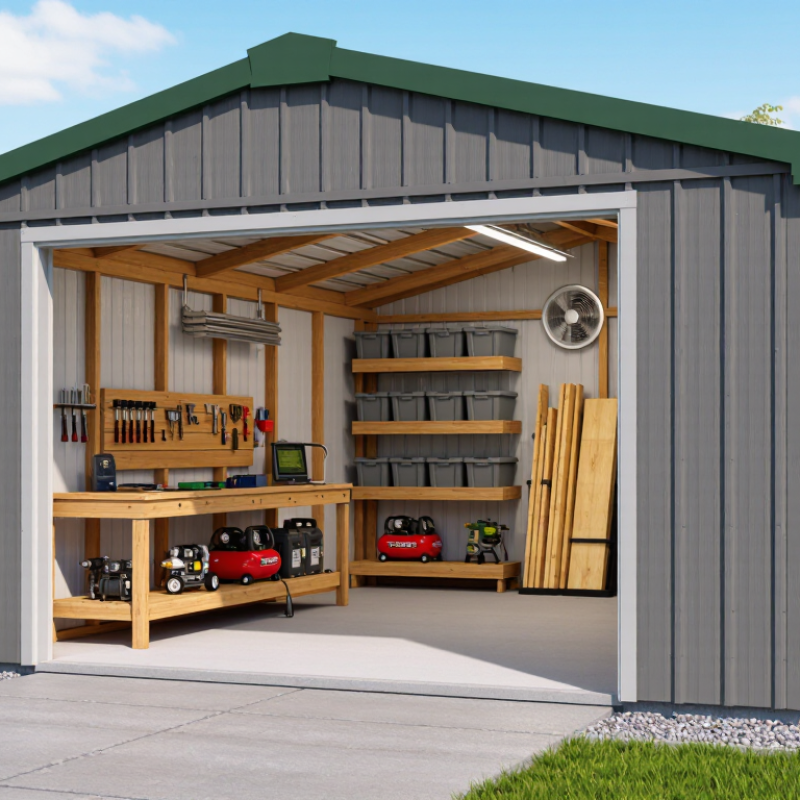
A good workshop shed starts with a clear definition of your work. Will you repair bicycles, build furniture, paint, or maintain garden tools? Each activity needs different surfaces, lighting, and ventilation. Write down your largest project and measure every tool you regularly use. A narrow bench may suit repairs, but it quickly becomes frustrating during cabinet work. Leave room for movement. You should be able to turn while carrying materials safely.

Measure the available ground, not just the shed footprint. Check door swing, roof overhang, drainage, and access for delivery. A 3-by-4-metre shed can feel generous until a workbench, compressor, and storage cabinet occupy the walls. Place frequently used tools between waist and shoulder height. Store heavy items on low shelves. Keep long timber or pipes in a dedicated vertical rack. Small drawers prevent screws and measuring tools from disappearing under clutter.

Storage goals deserve honest attention. Count your current containers, then allow space for future purchases and seasonal equipment. I once planned a compact layout and underestimated offcuts, packaging, and cleaning supplies. That mistake reduced my working area within weeks. Good ventilation, bright task lighting, durable flooring, and secure shelving support safer, more consistent work. Confirm local planning requirements and ground conditions before ordering. A beautiful shed still fails if rain reaches the threshold or the electrical installation is unsuitable.
How to Choose the Best Workshop Shed in 2026?

Define your workshop needs, activities, space, and storage goals before selecting a shed size. This planning example allocates the 240 sq ft available in a 12 × 20 ft workshop shed.

Planning insight: Reserve enough floor area for circulation and material handling, then balance workbench, machinery, tool storage, and project-storage space around your main activities. The ideal layout should leave clear access to doors, windows, and electrical points.

Compare Workshop Shed Sizes, Layouts, and Interior Configurations

Choosing a workshop shed in 2026 starts with the work, not the exterior style.

An 8-by-10-foot shed suits hand tools, a compact bench, and one narrow aisle. A 10-by-12-foot layout gives better clearance for a miter saw and mobile storage. For serious fabrication, a 12-by-16-foot plan feels more realistic.

The U.S. Census Bureau reported a median new-home size of 2,411 square feet in 2023. That figure shows why outdoor work zones remain useful. Interior space is limited. The NAHB’s 2024 What Home Buyers Really Want report found garage storage important to 67% of surveyed buyers. A shed should therefore reserve space for storage, not only machines.

Place the main bench beneath a window for balanced daylight. Keep at least 36 inches around active equipment, with wider clearance near doors. A 7-foot ceiling works for basic repairs, but 8 feet feels less restrictive.

Add wall-mounted rails, shallow cabinets, and one lockable drawer for small parts. Electrical planning matters. Put outlets above the bench and avoid burying them behind cabinets.

I prefer a door on the long wall. It makes bulky materials easier to move. Still, that layout wastes some wall space. A side door may work better for a narrow plot. These choices are easy to underestimate. Moisture, dust, and poor ventilation can ruin an otherwise efficient interior. The 2024 International Residential Code guidance should be checked locally before construction, especially for foundations, wiring, and ventilation.

Evaluate Building Materials, Durability, Insulation, and Weather Resistance

A workshop shed is a small building, not a disposable box. Start with its structural materials. Pressure-treated timber handles ground contact well, while galvanized steel resists rot and insects. However, thin steel can dent, conduct heat, and develop condensation. The U.S. Department of Energy explains that R-value measures resistance to heat flow. Higher R-values usually reduce heat transfer, but installation quality matters. Gaps around doors can defeat expensive insulation.

Weather resistance deserves equal attention. NOAA’s National Centers for Environmental Information recorded 27 billion-dollar weather and climate disasters in the United States during 2024. That number makes roof anchoring, drainage, and wall sealing practical priorities. Inspect roof overhangs, flashing, fasteners, and the base connection. ASTM E331 tests resistance to water penetration, but a tested panel does not guarantee a perfect shed assembly. Ask for assembly-level test evidence.

I would choose closed joints and replaceable roof coverings. Small details matter. Check whether insulation stays dry after repeated temperature changes. Ventilation also needs care; too little traps moisture, while too much can reduce efficiency. In my experience, buyers often compare wall thickness but overlook the floor. A damp floor can ruin tools faster than a cold wall. I would also question impressive durability claims without exposure ratings, maintenance instructions, and independent documentation. A lower-cost shed may work well, but only when its weak points are visible.

Review Security, Ventilation, Lighting, Electricity, and Safety Features

How to Choose the Best Workshop Shed in 2026?

A secure workshop shed needs more than a strong padlock. Check whether the doors resist prying, the hinges stay protected, and the frame can be anchored to a concrete base. The FBI’s 2023 Crime Data Explorer recorded over one million burglary offenses in the United States, so visibility matters too. Use motion lighting, clear sightlines, and windows positioned away from hidden corners. I would avoid storing expensive tools beside glass. That mistake is easy to make.

Air quality deserves equal attention. The U.S. Environmental Protection Agency reports that indoor pollutant levels can be two to five times higher than outdoor levels. Solvents, dust, and fuel vapors can accumulate quickly inside a small shed. Select cross-ventilation with low and high vents, then add mechanical extraction for dusty work. A visible airflow path is useful. Still, ventilation alone cannot replace safe chemical storage or respiratory protection.

Lighting should reach the bench without creating sharp shadows. Workshop guidance commonly uses about 500 lux for detailed tasks, based on EN 12464-1 lighting recommendations. Install sealed, impact-resistant fittings above work areas, not directly beside water sources. For electricity, use correctly rated circuits, residual-current protection, weatherproof outlets, and professional installation. NFPA research links electrical distribution and lighting equipment to thousands of U.S. home fires each year. Cables across walkways remain a poor choice. I have seen tidy sheds become trip hazards within weeks. Keep a clear aisle, mount extinguishers visibly, and test protective devices regularly.

How to Choose the Best Workshop Shed in 2026? - Review Security, Ventilation, Lighting, Electricity, and Safety Features

Evaluation Dimension Recommended Benchmark for 2026 Acceptable Minimum How to Inspect It Priority
Door Security Solid, reinforced door with a protected latch area, heavy-duty hinges, and a weather-resistant deadbolt or equivalent lock. A rigid door, secure hinges, and a lock that cannot be easily reached or removed from outside. Check door alignment, hinge protection, latch strength, frame rigidity, and resistance to prying. Very High
Windows and Access Points Few, well-positioned windows with laminated or reinforced glazing, secure hardware, and no low-level opening that exposes tools. Lockable windows and sealed openings with no visible gaps around frames or roof panels. Inspect window locks, frame strength, roof penetrations, vents, and utility entry points. High
Ventilation Cross-ventilation using low-level air inlets and high-level outlets, with adjustable vents or a powered exhaust fan for dusty or fume-producing work. At least two opposing ventilation paths, protected against rain and pests. Confirm that air can enter and leave freely; check fan capacity, noise, weather protection, and filter access. Very High
Dust and Fume Control Dedicated extraction for sawdust, sanding dust, paint vapors, or welding fumes; exhaust should discharge outdoors and away from doors and windows. Portable extraction or appropriate respiratory protection for occasional low-risk tasks. Look for an extraction connection, suitable ducting, spark-safe equipment where required, and replaceable filters. Very High
Task Lighting Uniform LED lighting providing approximately 300–500 lux for general workshop tasks, with brighter local task lighting for detailed work. Even illumination without dark corners, strong glare, or visible flicker. Test lighting at bench height; check shadows, glare, color rendering, switch location, and emergency access. High
Electrical Supply A professionally installed circuit with grounding, overcurrent protection, residual-current protection, weather-rated outlets, and enough capacity for planned tools. A safe, code-compliant supply installed and tested by a qualified electrician. Check the consumer unit, cable protection, outlet covers, circuit labeling, grounding, and inspection documentation. Very High
Outlet Planning Outlets positioned around the workbench and near equipment locations, with ceiling or wall outlets arranged to reduce trailing cables. Enough outlets to avoid regular use of extension leads across walkways. Map tool locations, check outlet height, confirm protective covers, and identify cable routes. High
Fire Protection Suitable multipurpose fire extinguisher, clear access to the exit, non-combustible protection near heat-producing equipment, and safe storage for flammable materials. A correctly rated extinguisher mounted near the exit and no blocked escape route. Check extinguisher type, service date, mounting height, fuel storage, and distance from ignition sources. Very High
Floor and Moisture Protection Level, load-bearing floor above surrounding ground, damp-resistant construction, sealed joints, and drainage that directs water away from the shed. A dry, stable floor with no standing water or visible structural movement. Inspect for dampness, rot, floor deflection, puddling, foundation settlement, and gaps beneath walls. High
Ergonomics and Clearance Clear walking routes, stable work surfaces, adequate headroom, and enough space to operate tools without contacting walls or stored materials. Tools and materials can be accessed without climbing over objects or crossing active work zones. Place full-size equipment inside the shed and check door swing, aisle width, bench height, and storage access. High
Emergency Safety Door opens easily from inside, emergency lighting or a rechargeable work light is available, and first-aid supplies and a phone are accessible. A clear, operable exit and basic first-aid supplies. Test the door from inside, check visibility during a power outage, and confirm that emergency equipment is reachable. Very High
Noise and Neighbor Impact Vibration isolation, insulated walls or ceiling where practical, and operating hours that comply with local requirements. Power tools can be used without excessive vibration or disturbance to nearby occupants. Check wall construction, floor stability, equipment mounting, and the shed’s distance from neighboring buildings. Medium
Maintenance and Inspection Accessible filters, replaceable seals, corrosion-resistant hardware, and a documented schedule for electrical, structural, and fire-safety checks. Major components can be inspected and repaired without dismantling the shed. Review service access, spare-part availability, roof condition, seals, fasteners, and inspection records. Medium

Note: The benchmarks above are practical selection targets rather than universal legal requirements. Always confirm local planning, building, electrical, fire, ventilation, and hazardous-material regulations before installation or use.

Set a Budget and Choose the Best Installation and Maintenance Options

A workshop shed starts with a realistic budget, not a glossy floor plan. The 2024 Houzz & Home Study reported that 87% of renovating homeowners hired professionals for at least one project. Installation can therefore become a major cost. Request separate prices for ground preparation, delivery, assembly, electrical work, and permits. A compact gravel base may suit light storage, but heavy tools need stronger support. Check local drainage, frost depth, wind exposure, and access for delivery vehicles. Measure twice.

Maintenance deserves its own budget line. The U.S. Energy Information Administration reports that space heating remains a major household energy expense, so insulation and air sealing may reduce workshop running costs. The U.S. Forest Service also recommends keeping vegetation away from exterior walls to improve airflow and reduce moisture risks. Choose washable wall finishes, corrosion-resistant fasteners, and roof drainage that directs water away from the foundation. Inspect seals after severe weather. Small leaks become expensive.

Professional installation offers accountability, but it is not automatically perfect. Ask for written scope, material specifications, warranty terms, and proof of relevant insurance. The 2024 International Residential Code emphasizes site-specific structural and foundation requirements, which local authorities may interpret differently. I would reserve 10–15% for surprises, although that allowance can still disappear quickly. Budget for annual gutter cleaning, fastener checks, and repainting when surfaces begin to chalk. A cheaper shed may become costly when every repair requires a specialist.