Choosing a Pu Leather Door Handle in 2026 requires more than matching colors with furniture. The handle must feel comfortable, resist daily friction, and suit the room’s humidity and traffic. A soft brown finish may look elegant in a showroom. It can also reveal scratches quickly beside a busy kitchen or office entrance.
Experienced installers usually examine the inner frame, stitching, edge finishing, and fixing points. A firm metal core should sit beneath the leather surface. Loose wrapping often creates wrinkles around the grip. Check whether the supplier provides material specifications, cleaning guidance, and a clear warranty. Reliable brands should explain their leather composition instead of using vague words like “premium” or “eco-friendly.”
Touch matters. Try opening a sample with dry and slightly damp hands. Notice slipping, pressure points, and the sound of the latch. Small details matter. The best choice also supports the door’s weight and existing hardware. Measure the backset, screw spacing, and handle height before ordering.
Still, no material is perfect. PU leather may age differently in sunlight, heat, or high-touch areas. Some finishes feel luxurious at first but become less convincing after months of use. That possibility deserves honest consideration. Look for abrasion testing, replacement parts, and customer feedback from comparable projects. In 2026, a practical Pu Leather Door Handle should balance tactile comfort, verified durability, responsible manufacturing, and simple maintenance. A beautiful handle is useful. A dependable one earns its place every day.
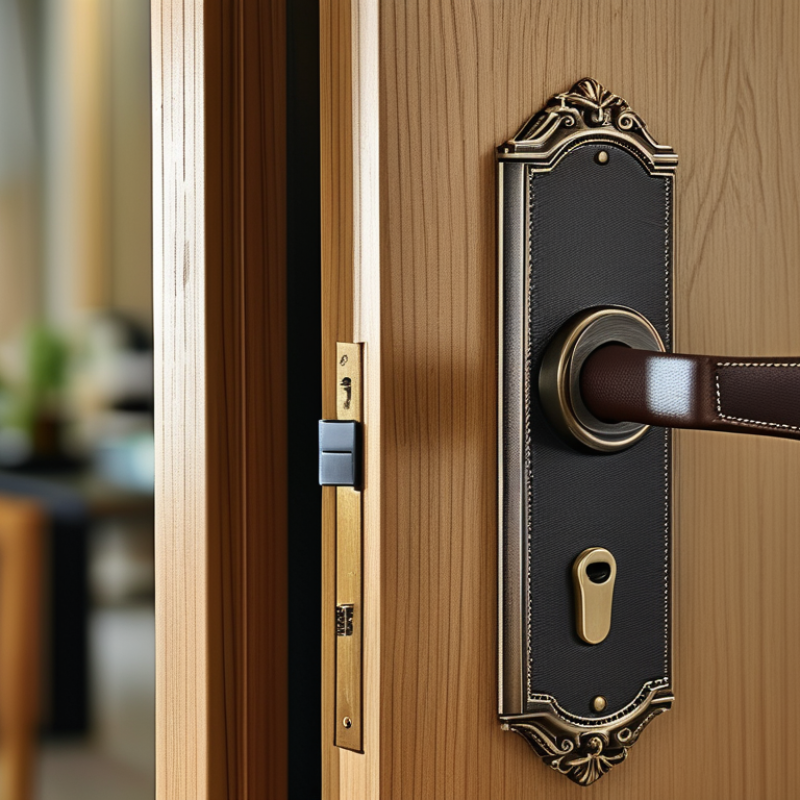
How to Choose PU Leather Door Handles in 2026?
PU leather door handles combine a firm metal or polymer core with a polyurethane surface. The result feels warmer than bare metal. It also softens visual lines around bedrooms, offices, and hospitality interiors. Grand View Research reported that the global synthetic leather market reached about USD 31 billion in 2023. Its report projects continued growth through 2030, driven partly by furniture and interior applications. This trend supports wider material choice, but market growth does not guarantee product quality.
Check the handle’s core, seam, coating, and fixing points. A dense PU layer should feel even, without bubbles, sharp edges, or strong chemical odor. Rub a hidden area with a damp white cloth. Color transfer is a warning sign. Ask for abrasion, hydrolysis, and UV test results. ISO 5470-1 can help assess coated-surface abrasion, while ISO 4892-3 addresses accelerated UV exposure. These tests do not perfectly copy daily use. They still provide useful evidence. Moisture resistance matters near kitchens and bathrooms, but PU is not automatically waterproof. Poor ventilation can weaken some coatings over time.
Look for a replaceable fixing system and clear care instructions. Avoid abrasive cleaners. A soft, slightly damp cloth is usually safer. One weakness remains. PU leather may age faster than solid metal under heavy contact. I would inspect the return policy and test a sample before ordering many handles. Small details matter.
| Evaluation Dimension | Recommended Specification or Typical Range | Importance | How to Evaluate | Why It Matters |
|---|---|---|---|---|
| PU Leather Construction | Polyurethane-coated textile or synthetic backing; confirm whether the handle is fully wrapped, partially wrapped, or only surface-covered. | High | Request a material specification sheet and inspect a cut sample for consistent coating and backing adhesion. | “PU leather” is a synthetic material, not animal leather. Construction quality strongly affects peeling, cracking, and long-term appearance. |
| Surface Thickness | Common finished PU coverings are approximately 0.8–1.5 mm, depending on the design and backing. | High | Measure the material with a suitable thickness gauge and compare several points on the same handle. | A thicker surface may improve cushioning and wear resistance, but thickness alone does not prove quality. Adhesion and formulation are equally important. |
| Abrasion Resistance | Prefer products with a documented abrasion result of at least 20,000 cycles for frequent-use interior doors, using a stated test method. | High | Review the test method, load, abrasive material, and end point. Do not compare cycle counts from different methods directly. | Door handles are repeatedly touched, so abrasion resistance helps prevent premature scuffing, color loss, and surface thinning. |
| Flexing and Crack Resistance | The covering should remain flexible without visible cracking after repeated bending around the handle profile. | High | Bend or flex a sample around the tightest radius used in the design and inspect seams, edges, and corners. | Tight curves and sharp edges place extra stress on PU coverings and can reveal weak coating or poor bonding. |
| Peel and Adhesion Quality | No lifting, bubbling, or edge separation under normal handling; bonded seams should be neat and firmly closed. | High | Inspect the perimeter, seam lines, screw openings, and transition areas. A controlled peel-adhesion test is preferred for production approval. | Poor adhesion is one of the main causes of early failure, especially near edges and high-contact areas. |
| Handle Core Material | Solid or reinforced metal core for frequent use; avoid relying on the PU covering as the structural component. | High | Check the core material, wall thickness, mounting points, and connection between the lever and spindle. | The internal core carries operating loads. A strong core improves stability while the PU layer provides comfort and appearance. |
| Corrosion Protection | Use a corrosion-resistant core or protective finish for humid areas; indoor dry-room requirements are less demanding than bathroom or coastal applications. | High | Ask for the corrosion-test method and exposure duration. Check exposed metal around mounting holes and joints. | Moisture can damage the internal hardware even when the PU surface still looks acceptable. |
| UV and Color Stability | For sunlit rooms, select material with documented lightfastness and a color-change result of approximately grey scale 4 or better where applicable. | Medium | Request accelerated UV or light-aging results and compare the tested color with the approved production sample. | Direct sunlight can cause fading, yellowing, or surface embrittlement. Indoor shaded applications normally have lower UV exposure. |
| Tactile Comfort | Soft, even, and non-sticky surface with rounded edges and no hard ridges at the grip area. | High | Hold and operate the handle repeatedly with dry and slightly damp hands. Inspect for pressure points and inconsistent padding. | The main advantage of PU leather handles is a warmer, softer touch compared with bare metal or hard plastic. |
| Grip Diameter and Shape | Choose a comfortable grip profile; many residential lever handles use an effective gripping diameter or thickness of roughly 18–25 mm. | High | Measure the grip at its widest and narrowest points, then test the handle with the intended users. | Ergonomic proportions reduce hand strain and make the handle easier to operate for children, older adults, and users with limited grip strength. |
| Slip Resistance | A lightly textured or matte PU surface is generally easier to control than a very smooth, glossy surface. | High | Operate the handle with dry, damp, and lightly moisturized hands. Confirm that the surface does not become excessively slippery. | Grip security is especially important in bathrooms, kitchens, healthcare areas, and other high-moisture environments. |
| Cleaning and Chemical Resistance | The surface should tolerate mild soap solution and a soft cloth. Avoid assuming resistance to alcohol, bleach, solvents, or strong disinfectants. | High | Follow the care instructions and verify compatibility with the cleaning agents used at the installation site. | Harsh chemicals may cause discoloration, tackiness, hardening, or delamination even when the product is mechanically durable. |
| Odor and Indoor Air Quality | Low-odor material with documented compliance for the intended indoor application and local chemical-emission requirements. | Medium | Open the packaging in a ventilated area and request relevant VOC or restricted-substance documentation when required. | A strong persistent odor may indicate residual processing chemicals or inadequate curing and can be undesirable in bedrooms and enclosed rooms. |
| Mounting Compatibility | Confirm door thickness, backset, spindle size, fixing-hole spacing, handing, rose or backplate dimensions, and latch compatibility. | High | Measure the existing door hardware before ordering and verify the supplied installation template. | A high-quality handle will not perform correctly if its spindle, latch, or fixing dimensions do not match the door. |
| Load and Cycle Testing | For frequent-use doors, prefer documented durability testing with the applied load, cycle count, and failure criteria clearly stated. | High | Request a test report or conduct a sample test that represents the actual door weight, latch resistance, and operating frequency. | Cycle performance depends on the complete handle set, not only the PU covering. The spindle, spring mechanism, screws, and latch all matter. |
| Intended Installation Area | Best suited to interior residential, hospitality, office, and low-to-moderate humidity applications unless specifically rated for exterior or wet use. | High | Match the product rating to exposure conditions such as rain, condensation, salt air, direct sunlight, and cleaning frequency. | Most PU leather coverings are not automatically suitable for exterior doors, shower areas, or continuously wet environments. |
| Maintenance Requirements | Regular dust removal with a soft dry or slightly damp cloth; no abrasive pads, solvent cleaners, or prolonged soaking. | Medium | Confirm that the maintenance instructions are practical for the building operator and end user. | Simple care helps preserve the finish and reduces the risk of premature surface damage. |
| Sustainability and End-of-Life | Prefer designs that use durable materials, replaceable hardware where possible, and clearly documented restricted-substance compliance. | Medium | Ask for material declarations, packaging information, and disposal guidance. Avoid unsupported “eco” claims without documentation. | Long service life and repairability can reduce replacement waste. PU-coated materials may be difficult to recycle when bonded to other materials. |
