Sorry, your browser is not supported. For a better experience, keep your browser up to date. Check here for latest versions
Choosing the best Teak Plywood begins with understanding your project’s real demands. Cabinet doors, yacht interiors, wall panels, and outdoor furniture require different performance characteristics. A sheet that looks excellent under showroom lighting may reveal uneven color, open joints, or weak bonding after cutting. Small details matter.
In practical woodworking, I have learned to inspect more than the teak surface. Check veneer thickness, core construction, sheet flatness, moisture content, adhesive quality, and visible repairs. Ask suppliers for technical data, production details, and relevant compliance documents. Do not assume that every teak-faced panel is suitable for marine or exterior use. Those applications need verified glue performance and careful edge protection.
The “best” choice is rarely the most expensive sheet. It is the panel that matches your environment, machining method, budget, and expected service life. Compare samples in natural light. Sand a hidden edge. Test how the surface reacts to your chosen finish. This extra work can expose problems before installation.
Responsible sourcing also deserves attention. Prefer suppliers who can explain the timber’s origin and provide credible chain-of-custody information where applicable. Product names can sound reassuring, but documentation is stronger evidence. I may still miss a hidden core defect, even after inspection. That is why ordering a sample and confirming specifications in writing remains a sensible safeguard. A careful decision produces cleaner cuts, more stable surfaces, and fewer costly surprises.
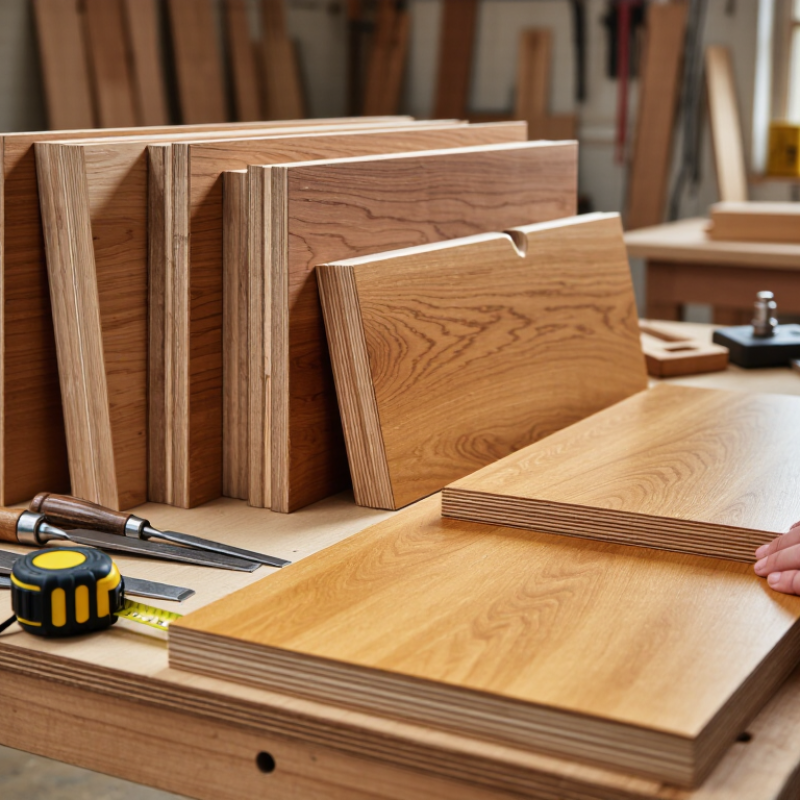
Teak plywood is an engineered panel made from thin teak veneers bonded over a layered core. Its visible teak surface gives projects a warm grain and natural oil content. However, not every teak plywood panel is made entirely from teak. The core may use other hardwoods, so check the construction before buying. This detail matters.
Its key performance comes from balance. Teak veneers can resist moisture, insects, and surface wear better than many ordinary timbers. Cross-laid layers also reduce movement across the panel. In a humid room, this helps doors, wall panels, and furniture stay flatter.
It is not waterproof by default. Poor edges, weak glue, or exposed screw holes can still absorb water.
Look closely at the panel before installation. The face should have even color, tight joints, and no open splits. Pressing the corners can reveal soft spots or separation. Ask for core details, bonding classification, thickness tolerance, and formaldehyde emission data. For boat interiors or outdoor applications, use a panel tested for the expected moisture exposure. Seal cut edges with a compatible coating, especially around sinks and fasteners.
Density also affects handling. A thick panel may feel strong but become difficult to cut or lift. Teak’s natural oils can reduce glue adhesion, so surface preparation and the adhesive specification deserve attention. A smooth finish is attractive, but it can hide uneven veneer thickness. That is easy to miss. Selecting the best panel means matching verified performance to the project, not choosing the darkest grain.
How to Choose the Best Teak Plywood for Your Project?
Teak plywood selection should begin with structural demand, not surface appearance. A golden, knot-free face may look excellent but reveal little about the core. I learned this the hard way. The cleanest panel was not always the strongest panel.
For shelving, wall lining, or cabinet doors, interior-grade plywood may be sufficient. Choose panels with stable cores and consistent thickness. For boat interiors, wet rooms, or exterior joinery, specify plywood tested for moisture exposure. EN 636 classifies plywood for dry, humid, or exterior conditions, while EN 314-2 evaluates bonding quality. These ratings matter more than the word “teak” on a sales sheet.
Load-bearing parts require closer inspection. Check the declared bending strength, modulus of elasticity, panel thickness, and allowable span. The USDA Forest Products Laboratory’s Wood Handbook, FPL-GTR-282 (2021), explains that wood strength changes with moisture content and grain direction. A damp panel beside an unsealed bathroom edge may perform differently from a dry sample in a showroom. Small details matter.
Look at the edges under bright light. Gaps, overlapping veneers, open knots, or uneven laminations can weaken screw holding and stiffness. Ask for test reports, moisture conditions, adhesive class, and production standard. Do not accept “marine” as automatic proof of structural capacity. It mainly describes water-resistant bonding, not every design requirement.
I still allow a safety margin. Real projects are rarely perfect.
Thickness has a major effect on bending stiffness. For the same plywood construction and material quality, theoretical bending stiffness increases approximately with the cube of thickness (t³). The index below is normalized to 1.0 for 6 mm plywood and is intended for comparison, not as a structural load rating.
Select the face grade according to appearance requirements: A-grade faces are suited to visible surfaces, while B- and utility-grade faces are generally more practical for concealed or working surfaces. For outdoor, wet-area, or marine projects, also verify the panel’s bond class, core quality, moisture resistance, and applicable structural certification.
How to Choose the Best Teak Plywood for Your Project?
Core material determines how teak plywood behaves after cutting, fastening, and exposure to moisture. Examine the inner layers along a freshly cut edge. Good plywood shows balanced plies, tight joints, and few visible gaps. Poplar, eucalyptus, and hardwood cores can perform differently under load. Match the core to your project, not only its appearance. For cabinet doors, dimensional stability matters. For outdoor furniture, moisture resistance and consistent density matter more. A lightweight panel is not always a weak panel, but unexplained softness deserves caution.
Veneer quality affects both appearance and service life. Look for straight grain, even color, and carefully repaired knots. The face should feel smooth without deep sanding marks or loose patches. Teak veneer may contain natural variation, which is attractive when controlled. However, sharp color changes across adjoining sheets can complicate finishing. I once approved a visually excellent panel too quickly; its thin face veneer exposed sanding damage near the edge. That mistake changed my inspection routine. Check the veneer thickness and ask how much sanding it can tolerate.
Bonding performance is equally important. Inspect the panel edges for delamination, bubbling, or uneven pressing. A reliable bond should remain firm after controlled moisture exposure. Ask for technical data, test results, and production tolerances. Do not trust a label alone. If possible, cut a small sample and examine the glue lines. The result may not look perfect. That is useful. Minor imperfections can reveal whether the panel suits your actual tools, finish, and working conditions.
How to Choose the Best Teak Plywood for Your Project?
Moisture resistance should be your first practical check. The USDA Forest Products Laboratory’s Wood Handbook reports that wood moisture content can rise from about 6% at 30% relative humidity to nearly 20% at 90%. That change can cause swelling, open joints, and surface checking. Choose plywood with documented exterior bonding, such as compliance with EN 636-3 or an equivalent standard. Inspect the edges closely. Gaps, dark glue lines, or uneven plies suggest poor manufacturing. A clean face can still hide weak bonding.
Sustainability requires more than attractive wording. The FAO Global Forest Resources Assessment 2020 records approximately 4.06 billion hectares of global forest, covering 31% of the world’s land area. Ask for legal origin records, chain-of-custody evidence, and plantation or responsibly managed forest documentation. Certification alone is not enough if the supplier cannot explain the material’s source. That detail is often overlooked.
Surface appearance affects both performance and cost. Look for consistent grain, limited knots, tight repairs, and an even golden-brown tone. Measure several sheets, not just one. Veneer color may vary between batches. It happens. For visible furniture panels, use a face grade with minimal patches and matching grain direction. For marine or outdoor work, prioritize bonding quality over perfect color. The most attractive sheet may fail after repeated wetting and drying. Specification sheets help, but physical inspection remains necessary.
| Plywood Type / Exposure | Typical Moisture Resistance | Recommended Use | Core and Bonding Checks | Sustainability Checks | Expected Teak Surface Appearance | Selection Guidance |
|---|---|---|---|---|---|---|
| Interior / Dry-Service Grade | Suitable for dry indoor conditions. Limited resistance to repeated humidity or liquid water. | Wall panels, cabinet faces, decorative furniture, and ceiling features in conditioned interiors. | Look for even veneer layers, tight joints, and an adhesive classification intended for dry conditions. Teak’s natural oils do not replace waterproof bonding. | Request documented legal timber origin and a recognized chain-of-custody certificate where responsible sourcing is required. | Usually selected for warm golden-brown color, straight or varied grain, and a smooth face suitable for clear finishing. | Choose this grade only when the panel will remain protected from condensation, leaks, and frequent cleaning water. |
| Moisture-Resistant Interior Grade | Handles occasional humidity better than dry-service panels, but is not automatically suitable for outdoor exposure. | Kitchens, bathrooms away from direct water, covered interior areas, and furniture exposed to intermittent humidity. | Confirm the panel’s stated bond class or test standard. Inspect edges for voids because open core gaps can allow water ingress. | Prefer low-emission panels with documented formaldehyde performance and traceable wood sourcing. | A- or B-grade faces generally provide a cleaner appearance; natural knots, mineral streaks, and color variation may still occur. | Use a compatible edge sealer and finish, especially around cut-outs, sinks, and fasteners. |
| Exterior / Weather-Sheltered Grade | Designed for humid conditions and occasional wetting when properly sealed and protected from prolonged exposure. | Covered balconies, sheltered doors, semi-outdoor furniture, boat interiors, and exterior decorative panels with adequate detailing. | Verify exterior-grade adhesive, bonded veneers, low core voids, and a manufacturer-declared durability or bond classification. | Check species identification, plantation or managed-forest documentation, chain of custody, and production-waste controls. | Teak face veneers can show strong grain variation; sample matching is recommended when several panels must appear uniform. | Seal all faces, edges, and penetrations. Design details must prevent standing water and allow drainage. |
| Exterior / High-Wet-Service Grade | Better suited to repeated wetting than interior panels, but performance depends on the certified adhesive system, construction, and finish. | Exterior joinery, frequently washed areas, sheltered marine components, and demanding humid environments. | Ask for water-resistance testing, veneer thickness, panel thickness tolerance, and evidence that the core remains bonded after wet cycling. | Prioritize certified legal sourcing and longer service life; a durable panel can reduce replacement frequency and material waste. | Select a face grade according to visibility: clear faces for premium joinery, or character-grade faces when knots and color differences are acceptable. | Do not rely on teak alone for durability. Use the correct coating system, fasteners, drainage, and maintenance schedule. |
| Marine / Structural Wet-Service Grade | Intended for demanding wet conditions when the panel complies with the required marine or structural specification. | Boat interiors, selected marine components, structural cabinetry, and applications requiring reliable bonded construction. | Confirm compliance with the project’s applicable marine standard, veneer quality, core void limits, glue-line durability, and structural calculations. | Use only legally documented teak and verify whether the certification covers both the face veneer and the core materials. | Surface quality is separate from structural performance; a premium-looking face does not by itself prove marine suitability. | Specify this grade only when the design, safety requirements, and exposure justify its higher performance and cost. |
| Decorative Teak-Faced Panel | Moisture resistance is determined mainly by the core panel and adhesive, not by the decorative teak veneer. | Feature walls, doors, furniture fronts, retail interiors, and architectural joinery where appearance is the priority. | Check face-veneer thickness, substrate grade, balanced construction, sanding quality, and whether the panel is suitable for the intended humidity. | Ask whether the teak is plantation-grown or responsibly managed and request documentation rather than relying on appearance alone. | Review color, grain direction, book-matching or slip-matching, patching, knots, sapwood, and acceptable natural variation before ordering. | Order a representative sample because photographs may not show natural differences between teak logs and veneer flitches. |
Compare Suppliers, Certifications, Costs, and Long-Term Value
Choosing teak plywood starts with the supplier, not the showroom finish. Request face veneer thickness, core species, glue type, and moisture data. Ask for a recent sample. Check its edges, grain direction, flatness, and hidden voids. A beautiful surface can conceal weak construction.
Compare at least three suppliers using the same specifications. Confirm production tolerances, packaging methods, replacement policies, and delivery records. Reliable suppliers explain their testing process clearly. They should provide certification documents that match the actual product, not a generic company certificate. Check chain-of-custody claims, emission ratings, and standards for interior or exterior use. Certification scope matters. I once treated a certificate as proof of quality, but its coverage was narrower than expected.
Price comparisons need more than a sheet-by-sheet quote. Include waste, shipping, sealing, machining, and future repairs. A cheaper panel may absorb more finish because of uneven veneer. It may also warp after installation. Measure moisture before cutting, especially in humid workshops. Long-term value depends on stable cores, strong bonding, repairable surfaces, and consistent supply. Teak plywood is not automatically durable. Poor storage can ruin good material. That part is easy to overlook. A practical test is simple: inspect several sheets from different bundles, then record defects before ordering.