Sorry, your browser is not supported. For a better experience, keep your browser up to date. Check here for latest versions
Choosing a China-based supplier for Polypropylene Pall Rings requires more than comparing prices. These random tower packings support gas-liquid contact in absorption, stripping, and scrubbing columns. Their performance depends on ring size, wall thickness, open area, installation quality, and operating conditions. A small change can affect pressure drop and liquid distribution. Details matter.
Industry reports provide useful context, but not a shortcut to product verification. The International Energy Agency’s The Future of Petrochemicals (2018) identifies petrochemicals as a major source of global oil and gas demand, underscoring the scale of process equipment used across chemical production. PlasticsEurope’s Plastics – the Fast Facts 2023 reports 400.3 million tonnes of global plastics production in 2022. That figure reflects broad material supply, not demand for Pall Rings specifically. Keep that distinction clear.
This guide examines how to assess manufacturers through measurable evidence: resin specifications, dimensional tolerances, documented pressure-drop or capacity data, quality-control records, and application references. Ask for test conditions, not just a polished performance claim. Request sample pieces and inspect their edges, weight consistency, and molded openings. Those details are tangible.
A “top” ranking is only useful when its criteria are transparent. A supplier’s brochure alone cannot prove long-term performance; field results and traceable documentation matter more. Some project conditions remain difficult to compare. That deserves scrutiny.
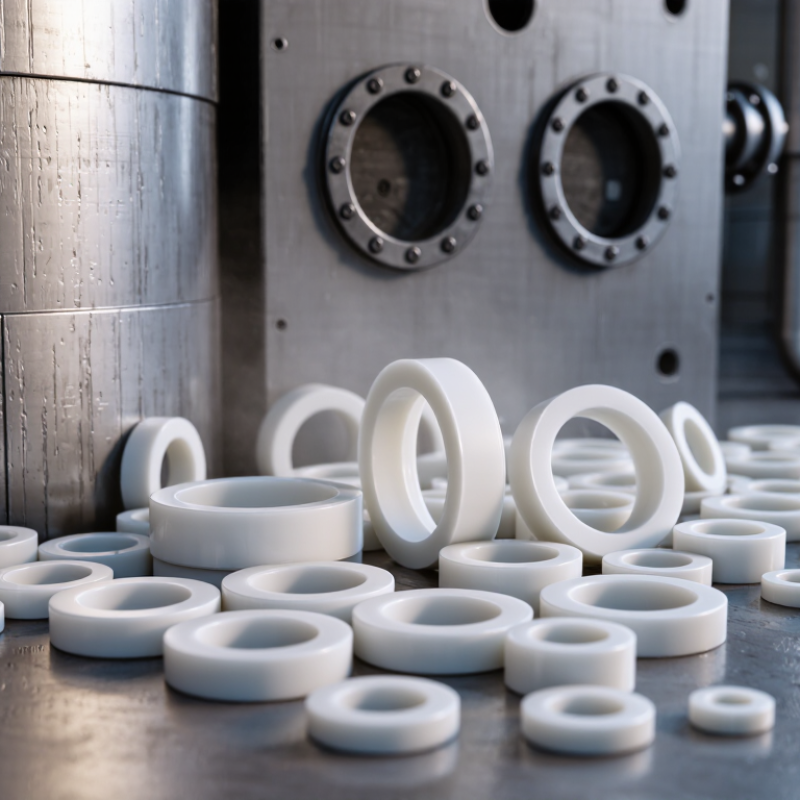
Polypropylene Pall rings are lightweight plastic packing pieces used inside gas–liquid columns. Their open cylindrical shape includes slots and inward-facing ribs. These features give liquid more surface area to spread across while allowing gas to pass through the bed. In a tower, liquid trickles over the rings as gas rises through the open spaces. Contact between the two phases supports processes such as absorption, stripping, and some scrubbing operations. The rings are usually poured randomly into the column, not arranged in neat layers. That detail matters.
Their performance depends on more than shape. Ring size, column diameter, liquid flow, and gas velocity affect wetting, pressure drop, and the risk of flooding. Polypropylene can suit many water-based and chemical service conditions, but it is not suitable for every temperature or fluid. Check material compatibility and operating limits against reliable technical data before selection. A practical review of the process conditions helps prevent costly mismatches. Even a familiar packing type can behave differently in a poorly distributed flow.
Tips: Confirm the column dimensions and fluid conditions before ordering. Inspect liquid distributors too; uneven flow can leave dry areas, reducing useful contact. Small details count.
Polypropylene Pall rings combine an open cylindrical body with internal ribs and side windows.
The openings let vapor and liquid move through the packing rather than follow one straight channel. In a well-made ring, inward tabs help spread liquid across the bed and support repeated contact between phases. Small details matter. Consistent wall thickness and clean edges can reduce weak points during handling and installation.
PP is valued for its low weight and resistance to many aqueous and chemical environments. It is also easy to mold into repeatable shapes, supporting uniform packing.
In service, the material’s temperature limit depends on resin grade, load, and exposure time; check technical data before specifying it. Heat can soften PP, and long-term loading may cause deformation. That balance is not automatic. More surface area is useful only when airflow, liquid distribution, and pressure drop suit the column.
For selection, compare ring dimensions, void fraction, estimated pressure drop, and compatibility with the process fluid.
Inspect samples for warped cylinders, blocked windows, or brittle edges. A quick visual check helps, but it cannot replace performance data for the operating range. Consider startup surges and cleaning methods, too. A ring that performs well in a cool water test may behave differently in a warm, viscous process. This is easy to overlook.
Manufacturing polypropylene Pall rings in China usually begins with material control. Production teams select polypropylene resin suited to chemical resistance, temperature, and packing performance. The resin is dried when required, then mixed with approved color or processing additives. Each batch should carry a traceable identification code.
Injection molding shapes the ring and its internal windows in a precision steel mold. Melt temperature, injection pressure, cooling time, and cycle speed require close control. Small changes can affect wall thickness, weight, and open area. This is where practical experience matters. Fast molding may increase output, but it can also create warping or short shots.
The molded Pall rings are cooled, removed, and checked for flash, deformation, and blocked openings. Inspectors commonly measure dimensions, sample weight, and visual consistency. Some manufacturers test crush resistance or chemical compatibility according to the buyer’s application. Packaging must prevent dust and compression during storage and transport.
The process is not flawless. Even stable equipment can produce occasional variation. Reliable factories investigate those deviations instead of hiding them. They review mold wear, machine records, operator settings, and inspection data. Buyers can strengthen quality assurance through pre-shipment samples, batch reports, and factory audits. A clear specification remains essential, especially for tower diameter, liquid load, temperature, and packing density.
Polypropylene Pall Rings are commonly produced by injection molding. The chart shows typical processing temperature windows used for PP molding; actual settings vary according to ring size, mold design, equipment, and resin grade.
The process generally includes material preparation, melt plasticization, mold filling, and mold cooling before automated ejection and quality inspection.
Industrial Applications of Polypropylene Pall Rings
Polypropylene Pall rings are widely used in gas absorption, air stripping, and chemical scrubbing towers. Their open structure exposes more surface area than traditional ring packing. This design supports steady contact between liquid films and rising gases. In water treatment, they help remove ammonia, hydrogen sulfide, and volatile organic compounds. Their low density also reduces tower load and simplifies installation.
Their chemical resistance suits acidic and alkaline process streams. Operators use them in wastewater plants, fertilizer production, metal treatment, and odor control systems. Polypropylene performs well at moderate temperatures, but heat limits must be checked carefully. A packed tower can appear efficient while suffering from poor liquid distribution. Distributors, support grids, and demisters deserve equal attention.
Sizing depends on gas velocity, liquid rate, pressure drop, and contaminant concentration. Smaller rings may improve contact but increase pressure loss or fouling risk. Larger rings reduce resistance, yet they may provide less effective wetting. Field technicians should inspect packing after shutdowns for cracks, deformation, and mineral deposits. A simple flashlight check can reveal dry zones. Results are not always perfect. Turndown operation, uneven flow, or unexpected temperature changes can reduce performance. Pilot testing remains valuable when the process contains solids or unstable gas loads.
| Industrial Application | Typical Column Operation | How Pall Rings Are Used | Why Polypropylene May Be Considered | Key Selection Considerations |
|---|---|---|---|---|
| Gas scrubbing | Absorption of selected soluble gases into a circulating liquid | Creates wetted contact surfaces for gas–liquid mass transfer in packed scrubbers. | Its low weight and resistance to many aqueous chemicals can suit compatible scrubber services. | Check the gas, scrubbing solution, concentration, temperature, and cleaning method for chemical compatibility. |
| Water and wastewater treatment | Air stripping of volatile compounds from water | Provides packing in stripping towers, where air and water flow in counter-current contact. | Lightweight plastic packing can be practical where corrosion resistance and ease of handling are priorities. | Confirm the target compounds, water chemistry, biological fouling risk, and required removal performance. |
| Chemical-process absorption | Gas absorption in a packed column | Random packing promotes contact between rising gas and descending liquid. | Polypropylene can be suitable for some corrosive environments where the process temperature is within its design limits. | Verify resistance to every process component; compatibility depends on chemical concentration and operating conditions. |
| Liquid stripping and degassing | Removal of dissolved gases or volatile components from a liquid | Increases gas–liquid interfacial contact within a packed tower. | The material’s low density can make installation and replacement easier than with many metal packings. | Column diameter, liquid distribution, gas flow, pressure drop, and packing size affect performance. |
| Cooling-tower and process-water contact | Gas–liquid contact in compatible packed equipment | Can serve as random packing where the equipment design calls for a plastic contact medium. | Its low weight and water resistance may be useful in suitable service conditions. | Assess heat exposure, UV exposure, mechanical loads, water treatment chemicals, and fouling tendency. |
| Packed-column process development | Pilot-scale absorption, stripping, or scrubbing trials | Provides random packing for evaluating mass transfer and hydraulic performance. | Lightweight packing is convenient to handle during pilot installation and modification. | Use packing data and column tests appropriate to the process; pilot results may not scale directly to full-size equipment. |
| Material and sizing note: Polypropylene Pall Rings are available in multiple nominal sizes, commonly including 16, 25, 38, 50, and 76 mm. Suitable size and service limits depend on column design, chemical compatibility, temperature, and mechanical requirements; confirm specifications with the packing supplier and process designer. | ||||
Evaluating a polypropylene Pall Ring manufacturer in China requires more than comparing unit prices.
Start with resin quality, not catalog claims. Polypropylene normally has a density near 0.90–0.91 g/cm³, according to PlasticsEurope material data. Ask for the resin grade, melt-flow range, operating temperature limit, and chemical compatibility chart. A reliable supplier should provide batch traceability, dimensional tolerances, bulk density, void fraction, and pressure-drop test results. Samples should match production material. Sometimes they do not.
Process performance matters more than appearance. The U.S. EPA Air Pollution Control Cost Manual reports that well-designed packed scrubbers can achieve removal efficiencies above 99 percent under suitable operating conditions. Pall rings influence liquid distribution, flooding velocity, and mass-transfer efficiency. Request test data at your expected gas velocity, liquid load, and packing height. Check whether the report identifies the test method. “High efficiency” is not a test method.
The 2023 Plastics—The Facts report recorded global plastics production of about 400.3 million tonnes in 2022, showing a broad and competitive raw-material supply base. That scale does not guarantee consistent molding. Inspect ring dimensions from several cartons, including wall thickness and deformation after storage. Use ISO 2859-1 sampling principles for incoming inspection, and request a certificate of analysis for every lot. Review the manufacturer’s mold-maintenance records, export packaging, replacement policy, and response time for technical complaints. Factory photographs help, but an independent inspection is stronger. You may still find small variations. That is why acceptance criteria must be written before payment.