Best Wooden Shed Manufacturers in China for Global Buyers
Choosing a reliable Wooden Shed manufacturer in China requires more than comparing catalog prices. Global buyers must examine materials, production experience, quality controls, export service, and communication standards. A shed may look attractive in product photos, yet its timber grade, moisture content, roof structure, and protective coating determine long-term performance. Small details matter.
This guide introduces leading Chinese manufacturers serving international markets. It focuses on practical factors, including factory capability, customization options, packaging methods, inspection procedures, and delivery experience. Buyers will also find questions worth asking before placing an order, such as whether kiln-dried wood is used and how corner joints are reinforced. Clear evidence is important.
Reliable manufacturers should provide technical drawings, material specifications, sample support, and consistent order updates. Certifications can strengthen confidence, but they should be checked carefully rather than accepted without verification. A professional supplier should explain limitations honestly, including possible color variation, seasonal timber movement, and maintenance requirements. No supplier is perfect.
The comparison also considers how manufacturers respond when problems appear. A scratched panel, delayed accessory, or damaged carton can reveal more than a polished sales presentation. This is where real experience becomes valuable. Global buyers need practical partners, not only low quotations.
The final choice depends on climate, budget, installation ability, and target market expectations. A coastal buyer may need stronger moisture protection. A retailer may prioritize compact packaging and repeatable quality. This guide offers a balanced starting point, while encouraging buyers to conduct independent checks before signing contracts. Some judgments remain subjective. That is worth acknowledging.
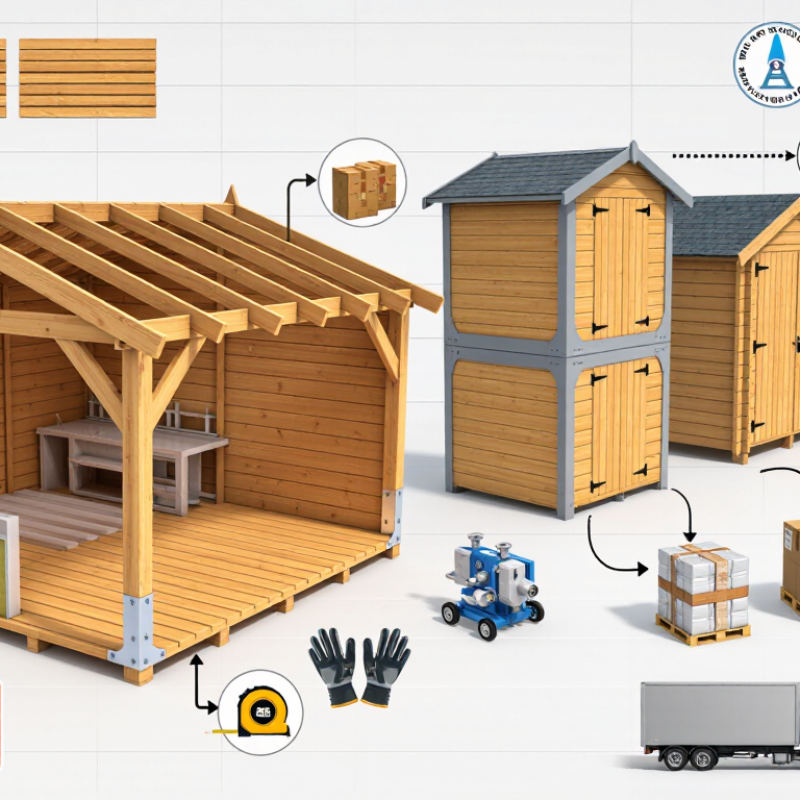
Understanding China’s Wooden Shed Manufacturing Landscape
Best Wooden Shed Manufacturers in China for Global Buyers
China’s wooden shed manufacturing landscape is broad, regional, and highly specialized. Production clusters in Zhejiang, Jiangsu, and Shandong commonly serve overseas buyers. Many factories process pine or spruce panels, roof trusses, flooring, and doors under one roof. Their capabilities vary widely, even within the same industrial area.
A reliable factory should explain timber moisture control, grading, treatment, and structural testing clearly. Kiln-dried wood often measures around 12% to 18% moisture before assembly. Buyers should request recent inspection records, production photos, and packaging details. A serious manufacturer can also provide drawings, hardware lists, loading plans, and installation guidance. Small details matter. For example, wrapped corner protection can prevent damaged boards during sea transport.
Factory visits reveal more than polished catalogs. Check whether stored timber is raised from the floor and protected from rain. Observe panel joints, fastener spacing, coating consistency, and worker safety procedures. A clean sample room proves little by itself. This assumption can fail. Some factories outsource treatment, painting, or metal components, which may affect lead times and quality control. Buyers should confirm each subcontractor and approve pre-shipment inspections. Production schedules may also change during humid seasons or holiday periods, so realistic delivery planning is essential. Cost remains important, but the cheapest quotation may exclude insulation, roofing membranes, or replacement parts.
Key Criteria for Evaluating Reliable Shed Manufacturers
Reliable shed manufacturers should provide measurable specifications, not only attractive photographs. FAOSTAT’s 2022 forestry data records roughly 1.9 billion cubic metres of global industrial roundwood production, making timber origin and grading important procurement questions. Ask for species, board thickness, moisture readings, and treatment details. Request recent inspection records, too. A neat catalog is not proof.
Check whether sample sheds match production units. Inspect corner joints, roof overhangs, floor supports, and fastener corrosion resistance. Ask how the manufacturer tests wind and rain performance, and request test conditions rather than broad claims. OECD guidance on responsible business conduct emphasizes risk-based due diligence across supply chains; buyers can apply that principle by checking supplier records and timber traceability. Paperwork matters.
Packaging deserves attention. Confirm crate dimensions, protective wrapping, spare-part availability, and written procedures for damage claims. A factory audit can reveal whether quality checks happen during production or only before shipment. Video calls help, but they cannot replace independent inspection. I would also compare quotations line by line; low prices can hide thinner panels or excluded hardware. Still, even detailed checklists miss things. Keep a signed sample and approved drawings as the reference for the order.
Leading Chinese Wooden Shed Manufacturers for Global Buyers
Leading Chinese Wooden Shed Manufacturers for Global Buyers
Chinese wooden shed manufacturers serve buyers seeking practical outdoor storage, garden studios, and utility buildings. Their capabilities vary, so compare more than quoted prices. Ask how timber is dried, sorted, and protected before assembly. Moisture control matters. Poorly dried boards may twist after shipment or during seasonal changes. Request photographs of workshop processes, sample joints, and finished surfaces. A close look at roof edges and door alignment can reveal useful details.
Reliable suppliers should explain material grades, wall thickness, roofing options, packing methods, and inspection steps in clear terms. Confirm whether drawings, assembly instructions, and replacement parts are available. Export experience can help with packaging and transport planning, but ask for evidence rather than relying on broad claims. I would still inspect a physical sample when the order is large; product photos can hide uneven finishes.
Tips:
Compare the same specifications across several quotations. Ask for a moisture reading and a written packing list. Check how panels are secured inside the container, especially around corners. Clarify who handles damage reports and missing components. Even good factories can make mistakes. A small trial order may expose gaps before a larger purchase.
Comparing Materials, Designs, Pricing, and Production Capabilities
For global buyers, compare wooden shed materials by performance, not appearance alone. The USDA Forest Products Laboratory’s Wood Handbook explains how moisture changes affect wood dimensions. Ask manufacturers for timber species, kiln-drying targets, and treatment details. A crisp finish proves little. In wet climates, untreated joints and exposed end grain can invite swelling or decay. Request close-up photos of roof edges, floor bearers, and door thresholds.
Design choices shape both price and shipping efficiency. A compact flat-pack shed may reduce freight volume, while thicker framing, insulated panels, and reinforced flooring add cost. Compare quotations using the same dimensions, wall thickness, roof load assumptions, hardware, and packing method. Otherwise, the cheapest quote may simply omit important parts. Small detail, big difference. Ask for a bill of materials and a sample assembly manual before approving production.
Production capability matters as much as the sample. The FAO’s Forest Products Yearbook tracks global wood production and trade, but national totals do not verify one factory’s capacity. Check monthly output, drying and machining equipment, inspection records, and packaging tests directly. Request a recent batch inspection report, not only polished showroom photos. Lead times can shift. I would also ask how defects are recorded and corrected; buyers sometimes overlook this uncomfortable question. A clear answer is useful evidence of process control.
Export Standards, Quality Checks, and International Order Procedures
For global buyers, export readiness begins before a wooden shed is packed. Ask the manufacturer for material specifications, assembly drawings, and the destination market’s required product documents. Requirements can vary by country and shed design, so confirm them with your importer or customs broker. Wooden packaging may also need treatment and marking under applicable import rules. Details matter.
Quality checks should follow the agreed drawings, not just a quick visual review. Measure wall panels, roof sections, and door openings against the specified dimensions. Check timber moisture with a calibrated meter, and inspect for cracks, loose knots, or warping. Test hinges, fasteners, and protective coatings on sample units. Keep dated photos and inspection records. They help resolve disputes.
Before production, confirm the bill of materials, finish, packing method, lead time, and payment milestones in writing. Approve a sample or pre-production unit when practical. Before shipment, verify carton labels, quantities, spare parts, and loading photos against the packing list. A checklist can still miss a small detail, such as screws packed separately without clear labels. Review it anyway. Clear records make international orders easier to track, even when production or shipping schedules change.
Wooden Shed Export: ISPM 15 Heat-Treatment Benchmark
For wood packaging used in international shipments, ISPM 15 heat treatment requires the wood core to reach at least 56°C and remain at or above that temperature for 30 consecutive minutes. This requirement applies to regulated wood packaging, not to the shed itself.
Order check: confirm whether the shipment uses regulated solid-wood packaging, and request the applicable treatment and marking documentation from the supplier or logistics provider. Requirements can vary by destination and packaging type.