Sorry, your browser is not supported. For a better experience, keep your browser up to date. Check here for latest versions
Choosing among the 10 Best Window Awnings for All Climates requires more than comparing colors and prices. A reliable awning must respond to sunlight, rain, wind, humidity, and seasonal temperature changes. A canvas awning that performs well in dry Arizona may struggle beside a stormy Atlantic coast. Small details matter, too. Look closely at fabric density, frame strength, drainage, mounting hardware, and cleaning requirements.
Building-science expert Joseph Lstiburek captures the central principle: “Keep the heat out before you try to cool it.” Well-positioned Window Awnings can reduce direct solar heat, soften glare, and protect indoor furnishings near south- and west-facing glass. They may also make outdoor spaces more comfortable during hot afternoons. However, no awning solves every climate problem. Snow loads, salt air, heavy rainfall, and strong gusts demand different materials and installation choices.
This guide examines ten practical options for varied weather conditions. Each selection is considered through performance, durability, maintenance, appearance, and value. Some choices are excellent for humid regions. Others suit cold winters or intense summer sun. A few may appear ideal but require more upkeep than expected. That is worth admitting. Product claims can sound impressive, yet real performance depends on correct sizing, secure installation, and local exposure. Measure carefully. Check the forecast patterns around your home. Then choose the Window Awnings that offer useful shade without creating a new maintenance headache.
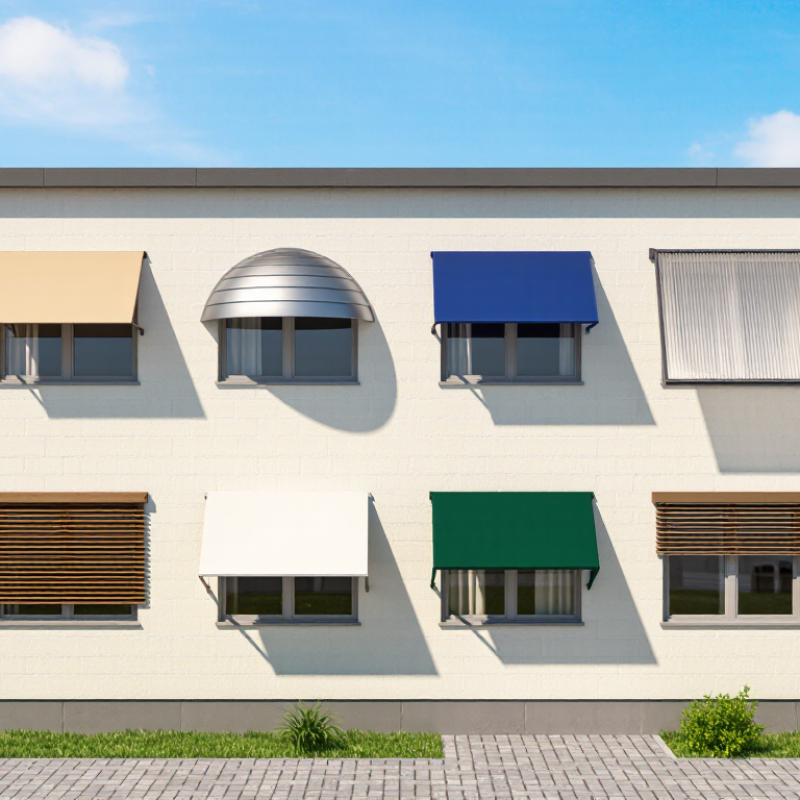
West-facing glass receives harsh afternoon sun when outdoor temperatures are already climbing. An exterior window awning interrupts that radiation before it reaches the pane. Under tested conditions, suitable awnings have reduced solar heat gain by up to 77%. The figure is impressive, but it is not a promise for every home. Details matter.
A deep, well-positioned awning usually performs better than a shallow decorative cover. Projection, window height, fabric openness, and mounting angle all affect shade. Light-colored materials can reflect more sunlight, while breathable fabrics may suit humid climates. In windy regions, retractable systems should include secure supports and reliable weather sensors. A fixed design may be simpler, but it can reduce winter sunlight if the window faces the lower seasonal sun.
For a west-facing room, check the glass at 4 p.m. Watch where the shadow falls across the frame and interior floor. This small observation can reveal poor sizing before installation. Keep ventilation gaps clear, and inspect fasteners after severe weather. Even excellent materials cannot correct an awning mounted too close to the glass.
I would avoid choosing from appearance alone. Awnings that look similar may differ greatly in solar reflectance and durability. Local climate data, window orientation, and professional measurements provide stronger guidance than a universal “best” list. Some homes may need side panels or exterior shades instead. The 77% reduction remains a useful benchmark, not a guaranteed result.
Choosing among the 10 best window awnings starts with climate, not appearance. ASHRAE climate zones classify regional temperature and moisture patterns. They do not prescribe one universal awning. They help narrow fabric, ventilation, and projection decisions. In hot-humid zones, breathable solution-dyed acrylic can reduce glare while allowing some drying. A 24-to-36-inch projection may shade upper glass, but rain and wind exposure still matter.
Hot-dry zones need strong solar control and fabrics that resist fading. Tighter woven materials can block intense afternoon sun, especially on west-facing windows. However, excessive projection may trap heat near the wall. Mixed-humid regions require a balance between shade and moisture management. Water-resistant fabrics help during sudden storms, while moderate projections maintain airflow around the opening.
Cold and marine zones need different caution. Retractable awnings can reduce winter interference, but snow, ice, and wind loads require careful engineering. Coastal projects should consider corrosion-resistant frames and reinforced mounting points. Field assessments often reveal that window orientation matters more than the zone label alone. Measure twice.
ASHRAE 169 provides useful climate guidance, yet local wind and structural requirements remain essential. Fabric weight, seam quality, drainage, and attachment details can change performance dramatically. A simple rule can fail. I would verify solar angles, window dimensions, and seasonal weather before selecting the final projection.
| ASHRAE Climate Zone | Typical Climate Conditions | Recommended Awning Type | Preferred Fabric or Screen | Suggested Projection | Recommended Solar Openness / Color | Key Design Priorities |
|---|---|---|---|---|---|---|
| Zone 1 Very Hot | Very high cooling demand, intense solar exposure, and limited heating requirements. | Fixed sloped awning or retractable awning with strong sun control. | Solution-dyed acrylic or a UV-stabilized, PVC-coated polyester fabric. | 0.9–1.2 m (3–4 ft) for typical residential windows; extend farther for large glazing. | Opaque fabric or mesh with approximately 1–5% openness; light or medium exterior colors generally reduce solar heat gain. | Prioritize high UV resistance, ventilation beneath the awning, corrosion-resistant hardware, and secure anchoring for wind exposure. |
| Zone 2 Hot–Humid | Hot summers, high humidity, frequent rain, and substantial cooling loads. | Ventilated fixed awning or retractable model that can be retracted before storms. | Mildew-resistant solution-dyed acrylic or breathable exterior solar screen. | 0.75–1.1 m (2.5–3.5 ft) to provide shade while allowing air movement. | Approximately 1–5% openness for screens; medium-light neutral colors help balance glare and heat control. | Use breathable, quick-drying materials; provide drainage; avoid designs that hold water or block natural ventilation. |
| Zone 3 Warm | Warm summers with mixed heating and cooling needs; conditions vary from dry to humid. | Adjustable or retractable awning for seasonal control. | Solution-dyed acrylic for general use; exterior mesh screen where outward visibility is important. | 0.75–1.2 m (2.5–4 ft), selected according to window height and orientation. | Approximately 3–10% screen openness or opaque fabric; moderate solar reflectance is usually appropriate. | Provide summer shading while allowing the awning to retract during cooler seasons for useful daylight and passive solar gain. |
| Zone 4 Mixed–Humid | Warm summers, cool winters, and significant seasonal temperature variation. | Retractable awning with seasonal adjustment or removable fixed canopy. | Solution-dyed acrylic or coated polyester with water-shedding treatment. | 0.6–1.0 m (2–3.25 ft) for common windows. | Approximately 5–10% openness for adjustable screens; medium colors help manage glare without excessive winter shading. | Retract or remove the awning during winter where passive solar heat is beneficial; include mildew resistance and reliable drainage. |
| Zone 5 Cool | Warm to mild summers, cold winters, and a strong need for seasonal flexibility. | Retractable awning or removable seasonal shade. | Solution-dyed acrylic, coated polyester, or a durable exterior screen for summer-only use. | 0.6–0.9 m (2–3 ft) for standard windows. | Approximately 5–10% screen openness; choose color based on glare control and desired winter solar access. | Use corrosion-resistant components and retract the awning before snow, freezing rain, or severe winter weather. |
| Zone 6 Cold | Cold winters, moderate summers, freeze–thaw cycles, and occasional heavy snow. | Retractable or removable awning designed for summer shading only. | Heavy-duty solution-dyed acrylic or coated polyester with cold-weather flexibility. | 0.6–0.9 m (2–3 ft), with additional projection only where summer solar angles justify it. | Opaque or low-openness screen fabric; use lighter colors where glare and cooling loads are significant. | Retract before snow accumulation; protect fabric from prolonged freezing moisture and account for freeze–thaw movement at attachments. |
| Zone 7 Very Cold | Very cold winters, short mild summers, heavy heating demand, and possible snow or ice loading. | Removable summer awning or compact retractable unit with a protected cassette. | Cold-flexible coated polyester or solution-dyed acrylic used seasonally. | 0.45–0.75 m (1.5–2.5 ft) for most windows. | Low-openness fabric for summer glare control; maximize winter daylight and solar access after removal. | Do not leave fabric deployed during snow or freezing rain; use robust wall anchors and allow clearance for ice and snow shedding. |
| Zone 8 Subarctic or Polar | Extremely cold conditions, very short summers, strong seasonal daylight variation, and severe winter exposure. | Seasonal, removable exterior shade rather than a permanent exposed awning. | Cold-resistant coated polyester or heavy solution-dyed acrylic installed only during the mild season. | 0.45–0.6 m (1.5–2 ft) unless detailed solar analysis supports a larger projection. | Low-openness or opaque fabric for summer glare; remove completely before freeze-up or snow season. | Design for easy removal, storage, wind resistance, and protection from ice, snow, prolonged moisture, and extreme temperature swings. |
Planning note: ASHRAE climate zones describe broad thermal conditions; they do not replace a project-specific analysis of window orientation, glazing, local wind, snow load, rain exposure, wall construction, and eave geometry. The projection ranges above are practical starting points for typical windows and should be verified by the awning engineer or installer.
10 Best Window Awnings for All Climates?
Ten awning types need different weather tests. According to the U.S. Department of Energy, awnings can cut solar heat gain by up to 65% on south-facing windows and 77% on west-facing windows. Lower SHGC usually means less indoor heat. NFRC ratings help verify that performance. Fixed sloped and louvered pergola awnings usually provide strong UV blocking and rain control. Dome, convex, and canopy designs shed rain well, but their side coverage varies. Retractable folding-arm and cassette awnings offer flexible shade, though exposed fabric should retract during storms. Drop-arm, vertical screen, and zip-screen awnings improve low-angle glare and UV protection. Zip systems usually control wind and rain better than open screens. Usually.
Wind class is not a universal marketing number. EN 13561 classifies exterior blinds by resistance, while local engineering rules may require separate calculations. Fixed systems often perform better in wind, but connections, brackets, and wall materials can fail first. Real performance depends on fabric openness, slope, drainage, and installation quality. A tightly woven acrylic or coated mesh can resist UV exposure, yet darker fabrics may absorb more heat. This trade-off deserves attention.
Tips: Ask for tested SHGC, UV transmission, and wind-class documents, not vague “all-weather” claims. Check rain direction at your window. A small side gap can soak the sill. For coastal or snowy locations, choose corrosion-resistant hardware and a steeper drainage angle. I would also inspect the awning after its first harsh season; laboratory ratings cannot predict every building.
For an awning, durability begins with the wind rating, not the fabric color. EN 13561 classifies external awnings from Class 0 to Class 3. Classes 1, 2, and 3 correspond to nominal wind speeds of approximately 28, 38, and 49 km/h. These figures come from the European standard’s testing framework, not from marketing claims. A Class 3 awning can resist stronger test conditions, but installation quality still matters. Wall type, bracket spacing, projection, and deployment angle can change real performance.
Fabric testing tells a different story. ASTM D5034 measures breaking strength, while ASTM G154 exposes materials to accelerated ultraviolet and moisture cycles. ASTM D3884 evaluates abrasion resistance. These tests provide useful laboratory evidence, but they do not recreate every coastal gust, freezing night, or dusty summer. The American Society for Testing and Materials also warns that accelerated exposure results should not be treated as direct outdoor service years. That limitation deserves attention.
Tips: Match the EN 13561 class to local wind records from your national meteorological service. Retract the awning before storms, even when its rating seems adequate. Check stitching, fabric tension, and fasteners each season. A strong fabric cannot rescue weak anchors. I have seen specifications look excellent on paper, yet poor masonry made the installation vulnerable. Test results guide decisions; they do not replace a site inspection.
A useful awning ranking starts with energy savings, not appearance. Measure the window’s direction, local heat, and daily sun exposure. A south-facing window may need deeper coverage than a shaded east-facing window. In hot climates, exterior awnings can reduce indoor heat before sunlight reaches the glass. That matters.
Compare savings against the purchase and installation cost. A low-priced awning may provide limited shade or weaken after repeated wind. Look for durable frames, secure mounting, and fabric rated for ultraviolet exposure. In snowy regions, drainage and snow-load resistance deserve careful attention. Energy performance is not identical across climates.
Lifespan, warranty, and maintenance reveal long-term value. A strong warranty should clearly cover fabric fading, stitching, hardware, and installation limits. Read exclusions carefully. Some warranties sound generous but require regular cleaning or professional servicing. Maintenance should be realistic: rinsing dust, checking fasteners, and removing trapped leaves may take minutes each season. Hinges and retractable parts need closer inspection.
In practical comparisons, I would score energy savings at 40 percent, lifespan at 25 percent, warranty at 20 percent, and maintenance at 15 percent. This weighting is imperfect. Energy prices and weather patterns change. A coastal home may value corrosion resistance more than a dry inland home. Keep invoices, installation records, and seasonal photographs. These details support warranty claims and expose problems before a small tear becomes an expensive repair.