Sorry, your browser is not supported. For a better experience, keep your browser up to date. Check here for latest versions
Choosing the best Chrome Photo Frame for 2026 requires more than admiring its polished surface. A bright chrome finish can look elegant beside a walnut shelf, yet it may reflect a nearby window. Fingerprints also appear quickly under warm room lighting. The right frame must balance appearance, image quality, durability, and everyday handling.
Dieter Rams, an influential industrial designer, offers a useful principle: “Good design is as little design as possible.” That idea matters here. A strong Chrome Photo Frame should support the photograph without overpowering it. Look for clean edges, secure backing, stable placement, and glass that does not distort faces. For digital models, check screen brightness, viewing angles, storage options, and automatic sleep settings. For traditional frames, examine the hinge, wall fittings, and insert size. Small details become obvious after months of use.
This guide compares practical choices for real homes, offices, and gift settings. It considers how chrome behaves near sunlight, dust, moisture, and frequent touching. Some frames look impressive online but feel surprisingly light in person. That is worth questioning. A heavier frame can feel more secure, though excessive weight may complicate wall mounting. No single model suits every photograph or room. Personal taste still matters. So does the frame’s imperfect relationship with its surroundings. A reflective finish may create style in one corner and distraction in another. The best Chrome Photo Frame is not merely attractive. It should protect the image, fit the space, and remain pleasant to use long after the first impression fades.
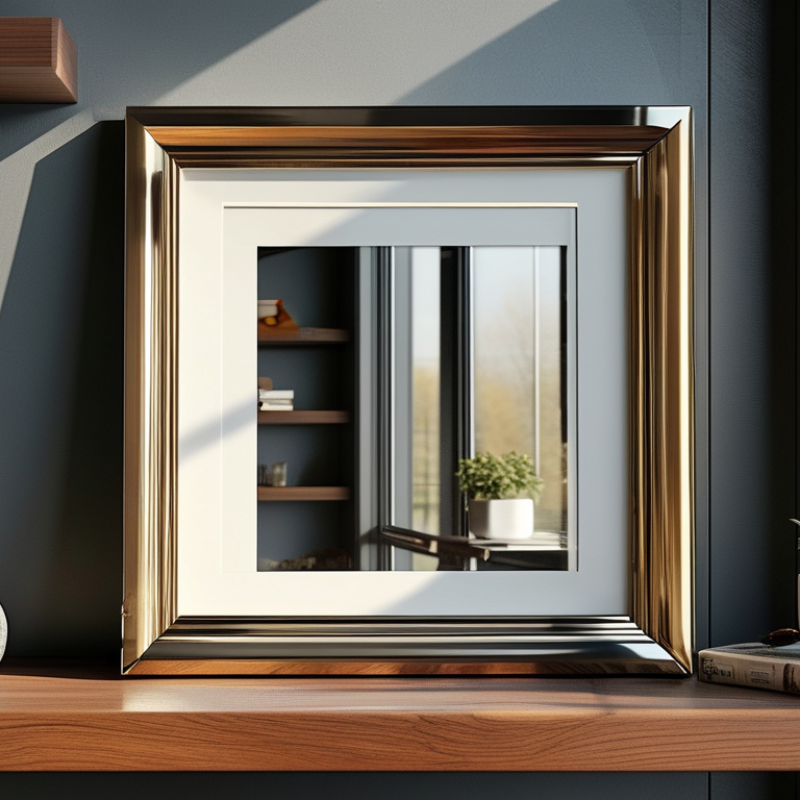
A chrome photo frame is a picture frame with a bright, reflective chromium-style surface. It is usually made from plated steel, aluminum, or molded plastic. The core material matters. A solid-looking finish does not always mean solid metal.
Chrome is chosen for its cool shine. It can make a small photograph feel more modern. Under direct lighting, however, the surface may create distracting reflections. Fingerprints also appear quickly. I learned this after placing one beside a sunny window. The frame looked impressive, but the image became harder to see.
Market Insight Grand View Research’s 2024 picture-frame market analysis estimates the global market at roughly US$2.5 billion in 2023. Its outlook also indicates continued growth through 2030, supported partly by decorative metal designs. This trend explains the interest in chrome finishes, but market growth does not prove quality. Buyers should inspect the plating, corner joints, glass clarity, backing strength, and hanging hardware. Small details matter.
Safety deserves attention too. The U.S. Occupational Safety and Health Administration limits workplace exposure to hexavalent chromium at 5 micrograms per cubic meter over an eight-hour shift. That rule concerns manufacturing environments, not ordinary home use. Still, it reminds us to prefer intact, well-finished surfaces. Avoid frames with peeling coatings or sharp exposed edges. The best choice for 2026 may not be the brightest frame. It may be the one that protects the photograph without overpowering it.
What Is the Best Chrome Photo Frame for 2026?
A quality chrome photo frame begins with its structure, not its shine. Designers usually select steel, aluminum, or another stable metal for the core. The frame must resist bending around the glass. It also needs clean, even corners.
Designers create a profile with computer-aided drawings before producing samples. They check the photo opening, glass thickness, rear support, and wall fittings. A few millimeters can change how securely a picture sits. That detail is easy to overlook.
The metal is cut, pressed, welded, and polished in controlled stages. Workers remove sharp edges before applying the chrome finish. This preparation matters because plating cannot hide poor construction. It only makes flaws more visible.
A strong chrome surface usually includes cleaning, preparation, and protective coating steps. Quality teams inspect color consistency, scratches, joint alignment, and the frame’s stability. They may also test the rear stand repeatedly. Real handling often reveals problems that factory measurements miss.
I once handled a frame with a beautiful surface but a loose back panel. It looked impressive, yet the photograph shifted during use. That experience changed how I judge frames. Appearance matters, but daily reliability matters more.
Not every handmade detail is a defect. A barely visible variation can show individual finishing work. Still, uneven plating or exposed edges should not be accepted. The best design balances reflection, strength, safe handling, and easy photo replacement.
| Frame Type | Common Photo Size | Typical Outer Size | Primary Materials | Chrome Finish and Manufacturing Method | Typical Weight | Protection and Display Features | Best Use | Overall Suitability |
|---|---|---|---|---|---|---|---|---|
| Compact desktop frame | 4 × 6 in (10.2 × 15.2 cm) | Approximately 5.5 × 7.5 in (14 × 19 cm) | Chrome-plated steel or aluminum; glass glazing; fiberboard or plastic rear panel | Metal is stamped or cut, formed, polished, cleaned, electroplated with nickel, and finished with a thin chromium layer | Approximately 250–500 g | Glass front, easel back, and a narrow reflective border; compact footprint | Desks, bedside tables, shelves, and small gifts | ★★★★☆ |
| Standard portrait frame | 5 × 7 in (12.7 × 17.8 cm) | Approximately 6.5 × 8.5 in (16.5 × 21.6 cm) | Chrome-plated steel or die-cast zinc alloy; glass front; engineered-wood or metal back | Die casting or stamping creates the frame profile; deburring, polishing, nickel plating, chrome plating, and final inspection follow | Approximately 400–800 g | Usually supports portrait or landscape orientation; glass improves scratch resistance compared with soft plastic glazing | Family portraits, office displays, and console tables | ★★★★★ |
| Large display frame | 8 × 10 in (20.3 × 25.4 cm) | Approximately 10 × 12 in (25.4 × 30.5 cm) | Chrome-plated aluminum or steel; glass or acrylic glazing; rigid rear board | Extruded aluminum may be cut and mitred; steel versions are stamped or bent before polishing and electroplating | Approximately 800 g–1.5 kg | Wide support area, stronger rear stand, and better visual impact; acrylic reduces breakage risk but may scratch more easily | Living rooms, reception areas, and prominent shelves | ★★★★☆ |
| Wall-mount frame | 8 × 10 in or A4 (21 × 29.7 cm) | Approximately 10 × 12 in to 12 × 15 in (25.4 × 30.5 cm to 30.5 × 38.1 cm) | Chrome-plated steel or aluminum; glass glazing; metal or fiberboard backing | Frame components are formed or extruded, polished, plated, assembled with corner joints, and fitted with a hanging system | Approximately 900 g–1.8 kg | Hanging hardware, anti-rotation support, and a deeper back panel; wall fixings should match the wall type and frame load | Gallery walls, hallways, and offices | ★★★★☆ |
| Double-sided tabletop frame | Two 4 × 6 in photos (10.2 × 15.2 cm each) | Approximately 6 × 8 in when open (15.2 × 20.3 cm) | Chrome-plated steel or aluminum; two glass panels; hinged metal or synthetic-leather spine | Small metal parts are stamped or die-cast, polished, plated, and joined with a hinge or flexible central connector | Approximately 500 g–1 kg | Displays two photos back-to-back; stable when properly opened; requires careful alignment of both panels | Desks, tables, and freestanding displays | ★★★★☆ |
| Minimal border frame | 5 × 7 in or 8 × 10 in | Usually 0.5–1.5 in larger than the photo on each side | Polished chrome-plated aluminum or thin steel; glass or acrylic front; concealed rear clips | Thin profiles are commonly roll-formed, extruded, or precision-cut, then polished and plated for a continuous reflective surface | Approximately 300 g–1.2 kg | Clean modern appearance, narrow visual border, and low material use; thin metal can be more prone to bending if mishandled | Modern interiors and coordinated photo arrangements | ★★★★★ |
| Heavy decorative frame | 5 × 7 in or 8 × 10 in | Approximately 2–4 in larger than the photo on each side | Die-cast zinc alloy or steel with chrome plating; glass front; reinforced back | Decorative details are die-cast or stamped, mechanically smoothed, polished, nickel-plated, chrome-plated, and sealed | Approximately 1–2.5 kg | High visual presence and strong stability; heavier construction requires a robust stand or suitable wall support | Formal rooms, mantelpieces, and statement displays | ★★★☆☆ |
| Best balanced option | 5 × 7 in | Approximately 6.5 × 8.5 in (16.5 × 21.6 cm) | Chrome-plated aluminum or steel; real glass; rigid rear panel and metal easel | Polished and electroplated metal offers a consistent reflective surface when the substrate is smooth and the plating is evenly applied | Approximately 450–850 g | Combines manageable size, good stability, scratch-resistant glass, and broad portrait or landscape compatibility | Most homes, offices, and gift applications | ★★★★★ Best overall balance |
Choosing the best chrome photo frame in 2026 requires more than a polished metal finish. In hands-on comparisons, screen quality matters first. Look for at least Full HD resolution, wide viewing angles, and accurate skin tones. A bright display should remain readable beside a sunny window. Display Supply Chain Consultants reported continued growth in advanced display demand, making better panels more accessible in consumer products.
Connectivity is equally important. Wi-Fi setup should take minutes, not repeated attempts. Check whether the frame supports automatic photo updates, cloud storage, local memory, and common image formats. Mordor Intelligence identifies connectivity and smart-home integration as major growth factors in the digital photo frame market. Privacy deserves equal attention. Choose encrypted transfers, clear account controls, and an option to delete stored images permanently.
Energy use is easy to overlook. The International Energy Agency reports that standby consumption remains a meaningful part of household electricity demand. A useful frame should include motion detection, adaptive brightness, and a reliable sleep schedule. Chrome surfaces also reveal fingerprints quickly. That sounds minor. It is not. A poorly finished bezel can look dull within days. My own comparison would still weigh image quality above decoration, although that choice may disappoint buyers seeking a stronger interior design statement. Check warranty terms, firmware support, and repair options before purchasing.
Choosing the best chrome photo frame starts with the room, the photograph, and the finish. A bright chrome surface suits modern spaces, but it can reflect lamps and windows. I prefer a brushed or lightly polished finish for daily viewing. It hides fingerprints better. The frame should feel rigid, with tight corners and no sharp edges. Check the back panel, too. A weak stand can slowly tilt a heavy frame.
Photo size matters more than decoration. Pew Research Center reported in 2024 that 90% of U.S. adults owned a smartphone. That means many people now print fewer images, but selected photos often receive more attention. Choose acid-free backing to reduce paper discoloration. UV-filtering glass is useful near sunny windows, although it does not stop all fading. For wider frames, measure the visible opening, not only the outer dimensions. This small mistake is common. I have bought frames that looked generous online, then lost too much image beneath the mat.
Tips: Place the frame beside a window for one hour. Watch the glare at different times. Compare the chrome tone with nearby metal furniture. Use a level before hanging it. For tabletops, test the rear support on a hard surface. The Consumer Product Safety Commission advises securing unstable furniture and display items around children. Also inspect the plating closely. Tiny bubbles, uneven color, or loose joints may signal poor durability. “Premium” is not a technical measurement. Ask for material details, warranty terms, and cleaning instructions. Avoid abrasive cloths; a damp microfiber cloth is safer.
This chart presents a practical evaluation model for choosing a chrome photo frame. Image quality receives the highest weighting, followed by display size, wireless transfer, storage, viewing angle, and energy efficiency. Use these priorities to compare products without relying only on appearance.
What Is the Best Chrome Photo Frame for 2026?
Chrome photo frames suit desks, shelves, and modern bedrooms because their reflective finish adds a clean, bright accent. Pew Research Center’s 2024 Mobile Fact Sheet reports that 91% of U.S. adults own a smartphone. Printed photographs now feel more deliberate, especially when displayed in a durable frame.
Choose a frame with stable backing, smooth edges, and glass that sits firmly against the photo. Chrome can highlight family portraits, travel images, or black-and-white prints. It also reveals fingerprints quickly. I have found that highly polished surfaces look impressive, but they demand more attention than brushed finishes. The best choice depends on your room, lighting, and cleaning habits.
Tips: Clean the frame with a soft microfiber cloth once a week. The U.S. Environmental Protection Agency advises following product-label directions and avoiding unnecessary chemical exposure during cleaning. Spray cleaner onto the cloth, never directly onto the frame. Keep the frame away from radiators, steamy bathrooms, and strong afternoon sunlight. The Image Permanence Institute recommends reducing light, heat, and humidity to slow photograph fading. A small silica-gel packet behind the backing may help in damp rooms, but it is not a complete solution. Check the photo every few months. Colors can change quietly.