Sorry, your browser is not supported. For a better experience, keep your browser up to date. Check here for latest versions
A4 Adhesive Labels are practical, flexible tools for offices, warehouses, schools, small businesses, and home workspaces. Their standard A4 sheet fits most inkjet and laser printers, making short-run labeling simple and affordable. A single sheet can carry address labels, barcode stickers, folder identifiers, product names, return details, or event badges. The result is often immediate: a plain cardboard box becomes traceable, and a crowded filing cabinet becomes easier to navigate.
Mike Fairley, a respected label-industry consultant and author, describes the role of labels clearly: “A label is the face of a product.” That idea applies beyond retail packaging. A4 Adhesive Labels communicate ownership, purpose, handling instructions, and basic brand identity within seconds. Their adhesive backing can attach to paper, cardboard, plastic, glass, and selected coated surfaces. However, the result depends on the surface. Dust, moisture, oil, or uneven textures can cause lifting. That detail is easy to overlook.
Choosing the correct label material also matters. Paper labels suit indoor documents and temporary organization, while polyester or polypropylene options may perform better in damp environments. Permanent adhesive is useful for shipping and inventory control. Removable adhesive works better for temporary signs or changing folders. Printer compatibility should never be assumed. Some sheets can curl, smear, or jam when used with the wrong printer settings.
A4 Adhesive Labels are not a perfect solution for every task. Still, when size, adhesive strength, and printing method match the application, they offer a clear and professional labeling system.
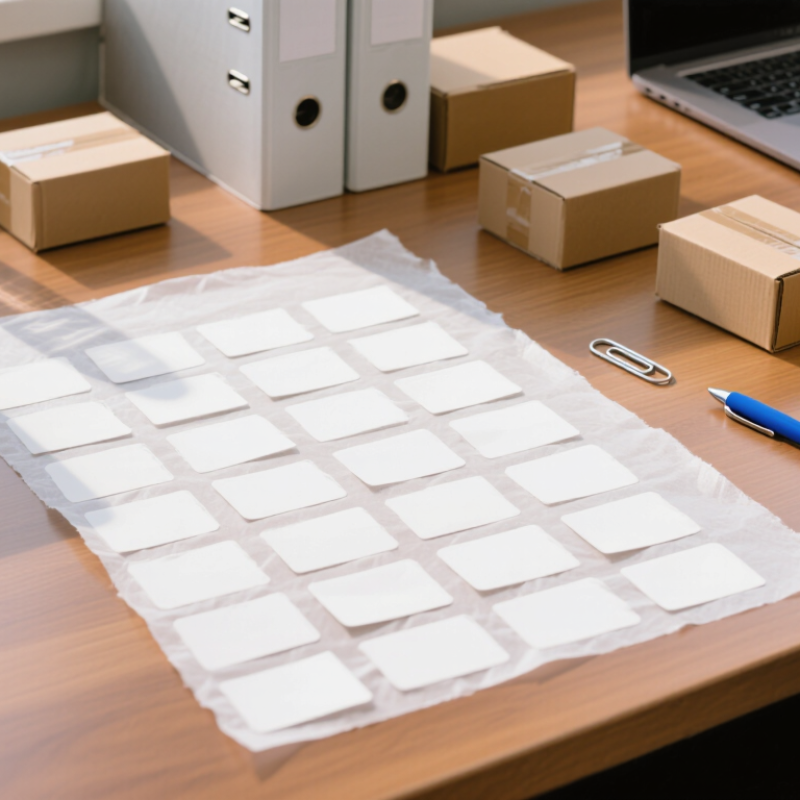
What Are A4 Adhesive Labels Used For?
A4 adhesive labels follow the ISO 216 standard, measuring 210 × 297 mm. This familiar sheet size fits many office printers and document workflows. Each sheet can contain several labels, depending on the chosen layout. Common uses include address labels, file identification, storage boxes, product details, and stock control.
The A4 format is useful because its dimensions are consistent across many countries. A warehouse worker can print location labels beside a desktop printer. An office assistant can mark folders without cutting individual pieces first. Clear text, strong contrast, and accurate alignment improve scanning and reading. Labels may also carry barcodes, dates, batch references, or handling instructions.
Check the printable margins carefully. A label design that touches the edge may shift during printing. Printer settings, adhesive thickness, and paper-feed direction can all affect placement. I once assumed every A4 template would align perfectly, but small calibration errors proved otherwise. A test sheet saves material. It also reveals whether the adhesive surface feels suitable for cardboard, plastic, or smooth paper. Temperature and moisture matter too, especially in storage areas. The standard size helps, but it does not guarantee identical label performance.
A4 adhesive labels are useful for office filing, parcel addressing, product identification, and short-run organization. Their large sheet format works well with common printers and allows several label sizes on one page. Paper labels are affordable and easy to write on. They suit folders, storage boxes, invoices, and temporary stock records. However, ordinary paper can wrinkle in humid rooms. Ink may also smudge before it dries.
Film labels are more resistant to water, abrasion, and handling. They are suitable for bins, outdoor-facing containers, laboratory equipment, and frequently touched surfaces. Their smooth finish can improve clarity, but some printers need compatible settings. Poorly matched ink may remain wet or scratch away. This detail is easy to overlook.
Adhesive choice matters as much as the label material. Permanent adhesive bonds firmly to clean cardboard, plastic, glass, and metal. It fits safety instructions, asset numbers, and long-term packaging. Removable adhesive supports temporary pricing, event signs, and changing shelf information. It should lift more cleanly, but results depend on surface texture, temperature, and application time. Test a corner first. A label that removes cleanly from glass may damage painted wood. Paper also tears more easily than film during removal. In practice, the best choice balances surface, exposure, print method, and expected label life. Mistakes happen. A small trial sheet can prevent a full batch from failing.
What Are A4 Adhesive Labels Used For?
A4 adhesive labels support addressing, product identification, inventory control, and shipping. Each sheet usually holds several peel-and-stick labels. Offices use them for envelopes, cartons, files, shelves, and storage bins. In practical packing workflows, clear typography matters more than decoration. Address labels need readable names, postcodes, and return details. Pitney Bowes’ Parcel Shipping Index reported more than 161 billion parcels worldwide in 2022. That volume shows why accurate shipping labels remain essential.
Product identification labels display item names, sizes, batch references, or internal codes. Inventory teams can attach them to racks, boxes, and containers. A scannable barcode reduces manual typing and supports faster stock checks. However, labels do not fix poor data. Incorrect product records still create incorrect labels. Smithers’ report, The Future of Labels and Release Liners to 2028, identifies self-adhesive labels as an important continuing format across packaging and logistics. A4 sheets also suit short runs, where dedicated label rolls may be unnecessary.
Tips: Match the adhesive to the surface. Test one label on cardboard, plastic, or glass first. Leave quiet space around barcodes. Keep text away from folded edges. Use laser-compatible sheets with laser printers, and inkjet-compatible sheets with inkjet printers. Store unused sheets flat and dry. Small alignment errors can waste material. They happen more often than expected.
A4 adhesive labels are commonly used for addressing, product identification, inventory control, and shipping. Their standard sheet format works well with office printers, making them practical for short-run and on-demand labeling tasks.
A4 adhesive labels suit address stickers, product information, filing tabs, and small packaging marks. Their standard sheet size fits common office printers and layout software. In practice, the printer type changes the result more than expected. Inkjet printing works best with labels designed to absorb liquid ink. Laser printing needs heat-resistant stock, or the adhesive may soften. Never assume every sheet suits both methods.
Use at least 300 dpi for readable text and simple graphics. Choose 600 dpi when QR codes, thin lines, or small type require sharper edges. Resolution alone cannot fix poor artwork. Set the document to the exact label dimensions. Include a small bleed, often 1–2 mm, when color reaches the edge. Follow the sheet supplier’s specification. Keep important text inside the safe area. Never assume the cutting edge is perfectly exact.
Alignment deserves a physical test. Print on plain paper, then place it over the label sheet against a bright window. Adjust top and side margins, not only the printer scaling setting. Turn off “fit to page” options. I have found that a perfect screen preview can still produce drifting rows. Humidity, curled sheets, and uneven feeding contribute. Recheck the first printed sheet before running a full batch. Some layouts need manual correction. That pause prevents wasted labels and unreadable edges.
A4 adhesive labels are practical for shipping records, product details, storage boxes, and office organization. Their 210 x 297 mm sheet fits many standard printers. However, size alone does not guarantee a reliable result. The right choice depends on the application surface, temperature range, and expected label durability.
On smooth cardboard, ordinary permanent adhesive often performs well. Glass may need an adhesive that resists moisture and repeated handling. Textured plastic, dusty containers, and curved surfaces are more difficult. A label that works on paper may lift quickly from these materials.
Clean and dry the surface before application. That small step matters.
Temperature can quietly weaken adhesion. Refrigerated storage requires labels rated for cold conditions. Freezer use demands stronger performance, especially during condensation and thawing. For warm equipment or sunlit areas, select materials that resist softening and fading. Check both application and storage temperatures. Durability also depends on handling. Paper labels suit indoor filing, while synthetic materials are better for moisture, friction, and frequent movement. No material works everywhere. That is easy to forget.
Tips: Test a small sheet first. Press labels firmly. Leave samples on the real surface for several days.
Review peeling, curling, ink smearing, and edge damage. From hands-on packing work, I have seen perfect-looking labels fail after one cold shipment. That mistake is avoidable, though testing takes a little extra time.