2026 Top Eva Deck Flooring Buying Guide for Global Buyers

Choosing Eva Deck Flooring in 2026 requires more than comparing colors, thicknesses, and quoted prices. Global buyers must examine foam density, closed-cell structure, adhesive performance, UV resistance, drainage, and installation support. A deck that feels soft in a showroom may become uncomfortable after months under tropical sunlight.

Grand View Research valued the global ethylene vinyl acetate market at approximately USD 11.09 billion in 2023. Its report projects continued growth through 2030, supported by demand from footwear, packaging, automotive, and construction applications. However, EVA foam used for marine decking is a specialized segment. General EVA market figures should not be treated as direct deck-flooring sales. That distinction matters.

Marine maintenance expert Don Casey offers a practical reminder: “The best boat maintenance is preventive maintenance.” This principle applies directly to Eva Deck Flooring. Buyers should inspect substrate preparation, bonding methods, edge sealing, and cleaning requirements before placing large orders. Small installation errors can create visible gaps around hatches and fasteners.

This guide compares supplier claims with measurable specifications. It considers temperature exposure, saltwater contact, foot traffic, compression recovery, and replacement difficulty. Technical sheets help. Real samples help more.

Some decisions remain imperfect. Laboratory ratings cannot fully predict every boat, rooftop, or outdoor platform. A low-cost roll may reduce initial spending, yet poor adhesive compatibility can increase long-term labor. Careful buyers should request test reports, batch information, warranty terms, and installation references before approving a shipment.
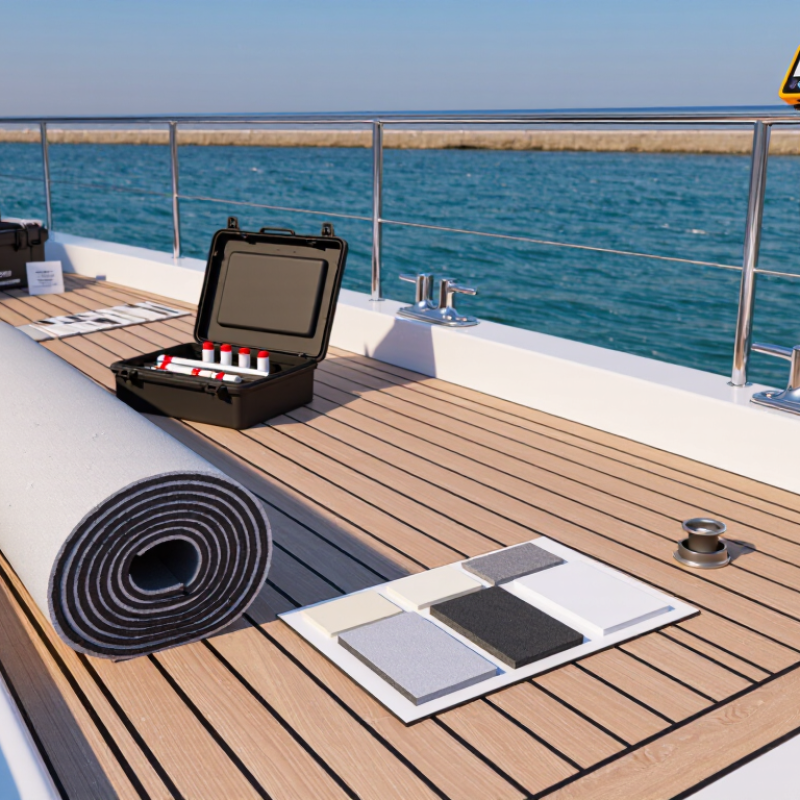
2026 Top Eva Deck Flooring Buying Guide for Global Buyers

What Is EVA Deck Flooring and How Does It Work?

EVA deck flooring is a closed-cell foam made from ethylene-vinyl acetate. It combines light weight, cushioning, and low water absorption. The cells resist water entry, while the textured surface improves traction under wet feet. It feels softer than fiberglass or aluminum decks. It also reduces noise from dropped tools and moving equipment. It compresses slowly.

Its working principle is simple. Foam cells deform under pressure, then partly recover when the load disappears. This cushions knees, stabilizes footing, and improves comfort during long periods onboard.

According to Grand View Research’s EVA foam market analysis, demand is supported by rising use in marine, transport, and protective applications. The report projects continued global growth through 2030, with regional results differing by construction and outdoor-use demand.

Buying decisions still require practical judgment. UV exposure can fade the surface and weaken some adhesives. Saltwater, heat, and poor deck preparation may shorten service life. The Global Market Insights EVA foam market report also identifies packaging, footwear, and automotive uses as major demand sectors, showing EVA’s broad industrial acceptance. However, broad market data does not guarantee marine performance. Check foam density, thickness, surface texture, peel strength, and temperature resistance. A darker deck may become uncomfortable in direct sun. Seam quality is often overlooked. That is where failures begin.

Key Types, Materials, Textures, and Design Options

EVA deck flooring is not one uniform product. Closed-cell EVA foam offers low water absorption, useful cushioning, and easy cutting around hatches. For frequent walking, choose thicker sheets, usually 6–10 mm. Thin 3–5 mm options reduce weight but can feel less forgiving on hard decks. According to Grand View Research’s 2024 flooring market analysis, resilient flooring remains a major product segment, supported by demand for comfort, durability, and easier maintenance. That broad trend supports EVA’s growth, but marine performance still depends on testing, not appearance.

Material density matters. Higher-density EVA usually resists compression better, while softer foam feels comfortable under bare feet. Brushed textures improve grip and hide small marks. Diamond, teak-look, and grooved surfaces create different visual effects and drainage behavior. A deep groove can collect sand. A tight groove may clean faster. No texture solves every problem. Check abrasion results against ISO 5470-1 where available, and request slip-resistance data under wet conditions. Test samples with water, sunscreen, and footwear before ordering.

Design choices include solid colors, two-tone borders, faux-teak lines, and custom-cut shapes. Dark colors look refined, but they may become hot under direct sunlight. Lighter colors show stains sooner. This trade-off is easy to underestimate. The 2023 Global Flooring Market report by Fortune Business Insights valued the wider flooring market at over USD 400 billion, yet EVA deck flooring remains a specialized purchase. Compare density, adhesive compatibility, UV resistance, thickness tolerance, and replacement lead time before focusing on patterns.

2026 Top EVA Deck Flooring Buying Guide for Global Buyers - Key Types, Materials, Textures, and Design Options

A practical comparison of EVA deck flooring formats, construction features, surface textures, design choices, and purchasing considerations.

Key Type / Format Typical Material Structure Common Thickness Surface Texture Best-Suited Applications Main Benefits Important Limitations Recommended Buyer Checks
Self-Adhesive Sheet Closed-cell cross-linked EVA foam with pressure-sensitive adhesive backing 5–10 mm Diamond, teak-line, brushed, or embossed grain Boat decks, swim platforms, fishing areas, storage lids, and cockpit floors Fast installation, low added weight, clean appearance, and easy trimming Requires a clean, dry, well-prepared substrate; adhesive performance may decline with contamination or poor bonding conditions Check adhesive type, liner quality, surface preparation instructions, peel strength, and temperature range
Interlocking Tile Molded closed-cell EVA foam with mechanical edge connections 10–20 mm Raised diamond, coin, or non-slip pebble pattern Temporary flooring, dock areas, work platforms, garages, and removable boat flooring Easy to install and replace; no permanent adhesive is normally required Joints may collect dirt or allow minor movement; tiles need accurate alignment Verify joint dimensions, drainage behavior, dimensional stability, and compatibility with the deck layout
Custom-Cut Panel CNC-cut or die-cut EVA foam panel, commonly supplied with adhesive backing 6–12 mm Teak-style grooves, logo-ready smooth areas, or linear embossing Boat bow sections, consoles, hatches, steps, curved edges, and complex deck plans Precise fit, reduced installation waste, and a professional integrated appearance Higher design and sampling cost; measurements must be accurate before production Confirm digital templates, tolerances, panel numbering, sample approval, and replacement-part availability
Roll Flooring Continuous closed-cell EVA foam supplied in rolls for cutting on site 5–10 mm Embossed non-slip texture, brushed grain, or linear groove pattern Large flat decks, production boats, marine walkways, and utility platforms Efficient for larger areas, fewer seams, and flexible cutting options Requires careful cutting and alignment; roll storage can cause temporary curl or deformation Check roll width, roll length, flatness recovery, seam visibility, and shipping dimensions
Drainage-Channel Panel Textured EVA foam with molded grooves or channels designed to guide surface water 8–12 mm Directional grooves, teak-line channels, or ribbed drainage pattern Wet cockpits, swim platforms, fishing decks, and exposed marine walkways Improves underfoot drainage and can help reduce standing water on the surface Channels can retain sand or debris and do not replace a properly designed deck drainage system Review channel depth, cleaning method, drainage direction, and compatibility with deck scuppers
High-Density EVA Panel Higher-density closed-cell EVA foam formulated for improved support and wear resistance 8–15 mm Fine diamond, embossed grain, or low-profile brushed surface High-traffic decks, commercial boats, loading areas, and frequently used platforms Better dimensional support, cushioning, and resistance to repeated foot traffic Usually less soft and may cost more than standard-density foam Request density, compression-set, abrasion, tensile, and dimensional-stability test data

Material, Texture, and Design Selection Matrix

Selection Dimension Option Typical Characteristics Suitable Buyer Priority
Foam Construction Closed-cell EVA Low water absorption, buoyancy, cushioning, and easy cleaning Marine and outdoor applications where moisture resistance is important
Surface Finish Teak-style groove Decorative linear appearance with recessed seams or grooves Buyers seeking a premium wood-look deck without actual timber maintenance
Surface Finish Diamond or pebble texture Raised pattern that provides tactile grip and visual texture Utility decks, fishing boats, work platforms, and wet environments
Color Design Single-color sheet Consistent appearance with straightforward cutting and installation Cost control, fleet standardization, and simple replacement planning
Color Design Two-tone laminate Contrasting top and base colors used for borders, grooves, or visual zoning Custom styling, walkway definition, and improved visual separation of deck areas
Edge Treatment Straight, beveled, or radius-cut edge Different edge profiles support clean transitions around corners and fixtures Projects with hatches, consoles, curved decks, or exposed panel boundaries
Branding and Layout Decorative inlay or cut-out graphic Permanent visual design created through layered colors or precision cutting Boat builders, rental fleets, clubs, and custom recreational projects
Global Buying Note: Before placing an order, confirm foam density, thickness tolerance, adhesive performance, UV and weathering data, slip-resistance test method, fire or marine compliance requirements, carton dimensions, and installation conditions for the destination market.

How to Evaluate EVA Deck Flooring Quality and Performance

2026 Top Eva Deck Flooring Buying Guide for Global Buyers

How to Evaluate EVA Deck Flooring Quality and Performance

When evaluating EVA deck flooring, begin with the material itself, not its color. Quality foam should feel resilient and return to shape after firm compression. Press one area for ten seconds. A lasting dent may indicate weak recovery or uneven cell structure.

Check thickness across several points with a caliper. Variations can create visible steps during installation. Examine the surface closely for pinholes, torn edges, or poorly bonded layers. Ask suppliers for density data, water absorption results, UV resistance, and slip-performance reports. Reliable documents should identify test methods and sample conditions.

Performance also depends on the installation environment. Marine decks face saltwater, sunlight, heat, and repeated foot traffic. Place samples under direct light and wipe them with mild cleaning solutions. Watch for fading, swelling, or adhesive separation. Test wet grip with a damp hand, but do not treat this simple check as laboratory evidence.

My early mistake was trusting a soft sample too quickly. Softness felt comfortable, yet it compressed more than expected beneath a knee. That experience changed my inspection process. A good product balances cushioning, recovery, dimensional stability, and surface traction. Review installation instructions carefully, including temperature limits and substrate preparation. A strong technical file helps, but real sample testing still matters.

How to Choose EVA Deck Flooring for Different Marine Applications

Choosing EVA deck flooring starts with the boat’s working conditions, not its color. Fishing boats need firm, textured surfaces that resist hooks, coolers, and repeated abrasion. Pontoon boats usually benefit from softer, wider sheets for comfort and noise reduction. Personal watercraft require strong bonding, fast drainage, and secure grip during sudden acceleration. Commercial workboats need higher density and easier cleaning.

According to Grand View Research’s 2024 EVA foam market report, the global market is projected to grow steadily through 2030, supported by demand for lightweight, resilient materials. The National Marine Manufacturers Association reported that U.S. recreational boating generated about 230.6 billion dollars in economic activity in 2023. These figures show broader demand, but they do not prove every EVA product suits marine use. Test evidence still matters.

Tips: Check closed-cell construction, UV stability, saltwater resistance, and adhesive compatibility. Measure hot and cold deck conditions before choosing thickness. Textured surfaces improve traction, but deep grooves collect fish scales and sand. I have seen attractive flooring fail because installers ignored drainage. A perfect specification rarely exists. Review abrasion data, peel strength, and cleaning requirements together. For high-traffic decks, prioritize durability over softness. For yacht seating areas, comfort may deserve more weight. Always request samples and test them with wet footwear, sunscreen, and fuel exposure. Even a small trial can reveal disappointing color changes or weak bonding.

Global Buying, Installation, Maintenance, and Compliance Guide

Global EVA deck flooring purchases require more than comparing thickness and color. Start with the installation environment. Measure temperature, moisture, sunlight, drainage, and substrate movement. EVA foam can expand under heat and lift when adhesive coverage is uneven. Clean, dry, and lightly abraded surfaces usually provide better bonding. Leave controlled expansion gaps near edges. Small details matter.

UNEP’s 2024 Global Status Report for Buildings and Construction states that buildings consume about 32% of global energy and produce approximately 34% of global carbon emissions. Buyers should therefore request product weight, service life, recycled content, and disposal information. Compliance also needs local checking. Ask for test documentation covering slip resistance, VOC emissions, fire behavior, UV exposure, and chemical resistance. EU REACH, UK REACH, and regional chemical rules may apply, but one certificate rarely satisfies every market. EVA products may also require separate evaluation under flooring or marine-deck standards.

Tips: Order samples from the exact production batch. Test them outdoors for several weeks. Check color change, edge curl, odor, and adhesive failure. Keep installation records and lot numbers.

Maintenance is simple but not careless. Sweep sand frequently, rinse salt after coastal exposure, and use neutral cleaners. Avoid petroleum solvents and aggressive wire brushes. Inspect seams after heavy rain or freezing cycles. Field inspections often find that neglected drainage causes more damage than normal foot traffic. A perfect buying checklist does not exist; climate, substrate, and installation skill can still change the result.

2026 Top EVA Deck Flooring Buying Guide for Global Buyers

The chart shows the estimated mass of EVA deck flooring per square metre at common thicknesses. The range is calculated using a planning density of 90–140 kg/m³, which is a representative range for closed-cell EVA foam; actual values should be confirmed in the supplier’s technical data sheet.

Thicker sheets generally provide greater cushioning and wear allowance but increase shipping weight and material consumption. For global procurement, verify density, dimensional tolerance, adhesive compatibility, UV and saltwater resistance, fire requirements, and applicable local compliance documentation before ordering.